Потрібна допомога адвоката?
Залишай заявку
Support of investment rounds and venture deals
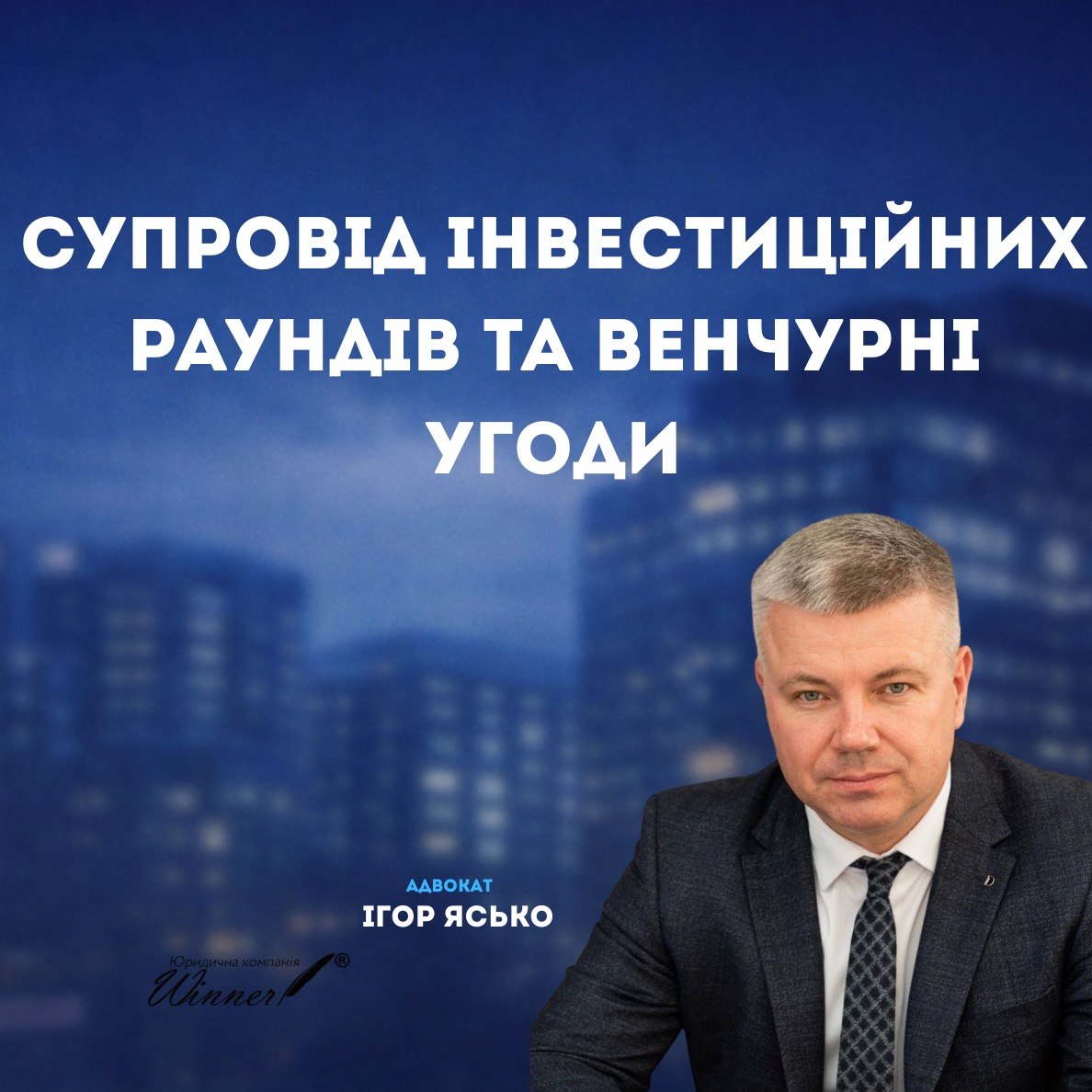
In the modern economy, raising venture capital has become one of the key drivers of innovative companies’ growth. For startups, this is not only a source of financing but also an opportunity to obtain strategic support, expertise and access to new markets. At the same time, investment rounds are a complex legal and financial process that requires professional support, especially under increasing demands for transparency, compliance and protection of the parties’ interests.
An investment round is a structured capital-raising process that usually takes place in several stages: preparing the company (due diligence readiness), searching for an investor, agreeing on key terms (term sheet), legally formalising the transaction and closing. Each of these stages has its own risks and requires clear coordination between the financial, legal and operational functions of the business.
One of the central documents is the term sheet, a preliminary agreement that sets out the main commercial parameters: company valuation, investment amount, investor’s stake, type of instrument (equity, convertible note, SAFE), voting rights and exit terms. Although a term sheet is often non-binding, its provisions frame further negotiations and significantly affect the final allocation of risks and control.
Choosing the investment instrument is critically important. Direct equity investment ensures a transparent ownership structure but may be less flexible at early stages. Convertible instruments (convertible notes, SAFE) allow the valuation question to be postponed, yet they create more complex scenarios in subsequent rounds, particularly regarding dilution and priority of claims. For a CFO, it is essential to model these scenarios in advance, including their impact on the cap table and future rounds.
Legal support for venture transactions includes drafting and negotiating the investment agreement (SPA or SHA), corporate documents, employee stock option plans (ESOP), as well as investor protection mechanisms such as liquidation preference, anti-dilution provisions, drag-along and tag-along rights. Each of these instruments has both a protective and a potentially conflict-prone nature, so balancing them is a key task of the negotiation process.
Special attention should be paid to the due diligence procedure. The investor analyses the company’s financial statements, tax risks, ownership structure, IP assets and contractual obligations. For Ukrainian companies this often means the need to align accounting with international standards (IFRS), formalise relationships with key counterparties and minimise tax risks. Having a “clean” legal structure and transparent financial track record significantly increases the chances of successfully closing the deal and improves investment terms.
Financial support of an investment round is not limited to preparing reports. It includes building a financial model that demonstrates growth potential, unit economics and capital needs. Investors expect to see not only an optimistic scenario but also sensitivity to key assumptions: growth rates, customer acquisition cost (CAC), profitability and operating expenses. A robust model allows the company to defend its valuation in a well-argued manner and negotiate on an equal footing.
Tax structuring of the transaction is another important aspect. Depending on the jurisdiction, type of investor and investment instrument, different tax consequences may arise for both the company and its shareholders. For Ukrainian startups, using foreign holding structures is a common practice that facilitates interaction with international investors but at the same time requires consideration of controlled foreign company rules, transfer pricing and currency regulation.
Corporate governance after fundraising is a separate challenge. Investors usually gain representation on the board of directors or supervisory body, as well as certain veto rights over key decisions. This changes the governance balance and demands greater discipline from management in planning, reporting and meeting KPIs. At the same time, a properly designed corporate governance system increases trust in the company and its investment attractiveness for future rounds.
The exit question is no less important. Investors build exit scenarios in advance — sale to a strategic investor, IPO or secondary sale of the stake. Exit terms recorded in the agreements can significantly affect the founders’ interests, so they must be analysed already at the stage of initial negotiations.
Overall, supporting investment rounds is a complex task combining financial analytics, legal expertise and strategic thinking. For companies seeking venture capital, it is crucial to ensure transparency, readiness and a professional approach to deal structuring. This not only enables fundraising but also lays the foundation for sustainable business growth.
If you have any questions or issues related to supporting investment rounds, structuring venture deals or preparing your company for capital raising, you should seek professional advice in a timely manner to minimise risks and achieve optimal transaction terms.
Author: Ihor Yasko, Managing Partner of JSC “Legal Company WINNER”, PhD in Law.
Потрібна допомога адвоката?
Залишай заявку

- Усі права захищені