Author name: admin

Без рубрики

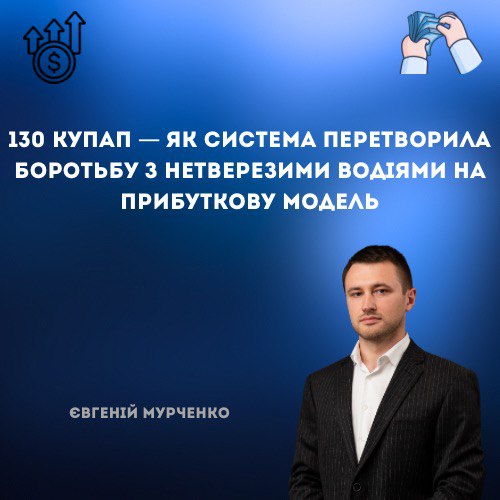
Profitable administrative machine: how Article 130 of the Code of Administrative Offenses changed penalties for drunk driving

The problem of driving under the influence of alcohol or drugs is not new for Ukrainian society. Since 2016, when the provisions of Article 130 of the Code of Administrative Offenses were radically updated, the state has declared a firm fight against drunk drivers. The reform involved higher fines and expanded sanctions, including license revocation and even vehicle confiscation. However, over the past five years, the fight against drunk driving has turned into a well-organized system of income for the state budget and related government and private entities. Evolution of Penalties and Economic ModelThe first significant changes came into effect in 2017–2020: fines for driving under the influence increased from a few thousand to a record 17,000 UAH, with one-year license revocation. A repeated offense within a year leads to a 34,000 UAH fine and vehicle confiscation; a third offense — 51,000 UAH and license revocation for ten years. Such levels of economic sanctions exceed not only the salary of most citizens but also the approximate cost of a new budget-class car. The growth in fines translated into a predictable increase in budget revenues. According to court statistics, in 2023 alone, more than 115,000 people (81.5% of cases reviewed) received administrative sanctions, and the volume of fines reached millions of hryvnias. In some regional courts, for example, over the first half of 2025 more than 1.7 million UAH in fines was collected, about 15% voluntarily. The actual collection rate is lower, as some drivers do not pay fines, lodge appeals, or deliberately delay enforcement. Administrative Benefit SystemWhen drunk driving fines increased, their collection turned into a structured process involving state agencies (police, courts, enforcement service) and private contractors who handle property confiscation, vehicle evacuation, etc. Apart from court fees, part of the expenses is borne directly by convicted drivers, such as: paying for towing services (from 2,000 to 6,000 UAH), vehicle storage at the enforcement service lot, court and administrative fees, legal expenses for lawyers, repeated medical exams, alternative expert reviews. Court realities are that up to 18% of cases are closed (annulled or returned for proper processing), but over 80% result in actual administrative sanctions for the benefit of the budget and the state. State Monetization and Incentivizing ProfessionalizationHigh fines and frequent sanctions have stimulated a robust market for legal assistance. Lawyers market “Article 130 services” as one of the most lucrative for clients seeking to avoid license revocation. Legal cases and appeals have become systemic, with lawyers forming whole groups of cases, earning fees for returning licenses or reducing fines, and supporting clients at all stages (from administrative detention to criminal liability in accidents). Judicial practice shows that in 20–30% of cases the case may be closed or sanctions softened due to procedural errors, inaccuracies in protocols, or improper documentation of evidence on intoxication. Systematic documentation of violations in police practice remains problematic, which allows both drivers and lawyers to exploit legal loopholes. New Legislative Initiatives and Stricter ControlIn 2025, new legislative changes were announced to further strengthen administrative control: mandatory vehicle impoundment, immediate confiscation for military needs during wartime, increased police capacity for issuing protocols even without driver consent. The share of actually paid fines is expected to rise, and confiscation procedures will become stricter and faster. At the same time, this creates a risk of corrupt schemes — the desire to “pay off” to avoid impoundment or confiscation offers opportunities for unscrupulous market actors. In cities with the highest number of fines per capita, side effects include legal delays, overcrowded impound lots, and rising demand for legal services. Negative and Positive Consequences for SocietyThe economic interest in the fight against drunk driving has a dual effect. On the one hand, increased budget revenue and effective deterrents do reduce the number of fatal accidents. On the other — more appeals and court disputes, higher stress for all parties and growing distrust in the system. The state demonstrates a strict stance, but minor deviations (like refusal to undergo a medical examination) are punished almost as severely as serious offenses. Legal risks for drivers have also increased: process complexity, risk of in absentia review, limited self-defense options and high legal fees. Does the system work as prevention?According to statistics, over 80% of Article 130 cases end with fines and license revocation, and the rate of repeat offenses is half what it was before the reforms. Alongside stricter controls, this indicates some effectiveness. However, indirect estimates suggest up to 20% of drivers avoid paying fines and continue using vehicles anonymously, easily bypassing interim bans. European experience shows that only a combination of heavy fines, property confiscation, treatment for alcohol and drug addiction, and information campaigns genuinely reduces road mortality. In Ukraine the main focus is fiscal effectiveness and accelerating administrative procedures. ConclusionsThe system for countering drunk driving under Article 130 has become a multi-level economic model generating significant revenue for the budget and related services. The administrative machine works quite effectively and demands maximum responsibility and procedural know-how from drivers. At the same time, monetary motivation from state agencies, lawyers, contractors and related businesses has created new risks for the unjustly punished, as well as fueling the growth of legal defense services for Article 130 cases. The conditions may change, but the “industry” of administrative liability will continue to develop — while drivers and the system seek a balance between prevention, fairness, and financial efficiency. Author: Yevhen Murchenko — Head of Criminal Law and Procedure Practice, WINNER Law Firm. If you have any questions or problems related to patrol police actions, administrative fines, traffic violation disputes, or other road safety issues, seek professional advice. https://youtu.be/S9C2nn5VO0I?si=kEArOuNfxLoR6qAz

Без рубрики

Notice of suspicion to the PGO prosecutor and lawyers — legal analysis and case implications

The NABU together with the SAP reported suspicion to a Prosecutor of the Prosecutor General’s Office and several lawyers. According to official sources, the pre-trial investigation concerns possible receipt of unlawful benefit in the amount of $3.5 million for alleged assistance in decision-making within another criminal case. Materials confirm the transfer of a first installment — $200,000, after which the participants were notified of suspicion. Investigative actions are ongoing.Legal qualificationPreliminarily, suspicion was reported regarding the following offenses: Part 2, Article 15 of the Criminal Code of Ukraine — completed attempt to commit a crime; Part 4, Article 27 of the Criminal Code — organization or aiding and abetting in the commission of a crime; Part 4, Article 369 of the Criminal Code — offering, promising or providing unlawful benefit to an official, committed by an organized group or in a particularly large amount.The pre-trial investigation is ongoing; final qualification and liability can only be determined by a court after reviewing all evidence.Procedural aspects Standard of proof — in such cases, compliance with admissibility of evidence (Articles 86, 87 CPC of Ukraine) is key. Procedure for notifying of suspicion — the involvement of lawyers and a prosecutor in a single case requires procedural purity of investigative bodies. The role of HACC and SAP — the case may become a reference point for future judicial practice.WINNER’s commentaryCases concerning suspicion of corruption-related crimes in the legal profession require maximum legal precision and compliance with the presumption of innocence. The main goal for both sides is to ensure the right to defense and adherence to fair justice standards.Author: Ihor Yasko, managing partner of WINNER Law Firm, PhD in Law.If you have any questions or issues related to corruption, official crimes, criminal defense, or liability — contact WINNER Law Firm for qualified legal assistance.👉WINNER — Your victory! https://www.youtube.com/watch?v=V6VIYjriyBw&t=16s

Без рубрики

How will draft law 14025 change the taxation of online sales and freelancing in Ukraine?

Bill No. 14025, known as the “OLX tax,” became a key 2025 initiative for reforming the taxation of income from digital platforms in Ukraine. Its adoption is aligned with European DAC7 rules and aims to legalize online sales, freelancing, gig-economy work, and rentals through services like OLX, Prom, Rozetka, Bolt, Airbnb, Uber, Kabanchik, and others. Key Provisions of the Bill.  The document supplements Ukraine’s Tax Code with a new article on automatic international information exchange regarding income earned via digital platforms and introduces clear duties and taxes for “reportable sellers” and platform operators. Tax Agent: Who and How.  Operators of digital platforms (marketplaces, taxi aggregators, freelancing, rentals): OLX, Prom, Rozetka, Airbnb, Bolt, Glovo, Uklon, and others.They are required to collect data on users’ revenues, submit reports to tax authorities, and automatically withhold and transfer taxes to the budget.The operator must identify “reportable sellers,” submit their registration, and provide user-specific income information. Seller-taxpayer: Reporting Criteria and Activity Types Covers everyone receiving income from goods sales, real estate and transport rentals, or personal services (repairs, cleaning, care, freelancing, etc.) through platforms.If annual turnover exceeds 12 living minimums (36,300 UAH for 2025) or more than three operations are performed, a special procedure applies—mandatory separate bank account and tax accounting. Rates and Administration Mechanisms Up to 36,300 UAH/year (single sales)—exempt from taxation, but tax is withheld automatically and returned via annual declaration.For higher/regular income: 5% personal income tax (privileged rate) if a separate account is used, no FOP registration, and within the 6.7 mln UAH limit per year. 18% + 1.5% military levy if conditions are unmet. The platform operator administrates the entire process online and pays taxes for users. Operator Duties and New Control Order Identifying reportable sellers, registering with the tax office, and submitting detailed financial returns for each user. Platform liability for violations or late disclosures reaches tens of thousands of UAH in fines. A public monitoring platform is created for automated reconciliation of tax, bank, and aggregator data. Functional Features All payments—only through the user’s identified account. For cash deals made “bypassing” the platform, the seller bears responsibility and tax risk, but the operator still reports activity. Tax-free Minimum and “Small Seller” Protection The bill includes safeguards: occasional sales under 36,000 UAH per year or up to three operations do not require a special account or FOP registration. Full exemption applies, barring signs of “business activity.” Government Arguments and Market Reaction Pluses: Alignment with EU law, seamless DAC7 implementation. Automated tax administration, simplifying life for honest freelancers and occasional sellers. Higher budget revenues. Critique and risks: “Fiscalization of routine sales”, increased control over personal data, risk of widespread informal cash transactions outside platforms. Technical burden on platforms: new compliance costs and liabilities. User Scenarios Rare sales—tax is withheld but refunded after yearly declaration. Earnings above the limit or ongoing business—keep records, open a special account, report and expect automatic tax deductions. For landlords, taxi drivers, gig workers—same transparency, online banking, and automated administration. Conclusions: The Future of Digital Taxation.  Bill 14025 is the first major move toward unified taxation rules for digital platforms, making all interactions between citizens, platforms, and the tax service digital. It protects the “white” market segment, deters the service shadow economy, and benefits the budget, while pushing micro-businesses and the self-employed to search for optimal compliance regimes. For most Ukrainians who sell rarely, little changes; but those who earn online regularly will need to adjust their finances, keep records, and track the new rules and rates. For digital platforms, it means a new level of control, accountability, and extra investment to meet global standards. Author: Maksym Bahniuk, Head of Tax and Customs Practice, WINNER Law Firm.For questions regarding Bill 14025—contact for professional consultation. https://youtu.be/rEd6me-Ume4?si=r2qIcjdQmAbSefy9

Без рубрики

New functions of the STS and expansion of powers: how the service will change in 2025

In autumn 2025, the Ministry of Finance released a draft of the new Regulations on the State Tax Service of Ukraine, significantly expanding the powers and functions of the STS in line with modern management standards, European best practices, and Law No. 4225-IX. The main goal is to unify mechanisms of internal control, audit, and civil protection, making the tax administration system more transparent and constructive. Reasons and focus of the reformThe need to update the Regulations arose from new requirements of the Budget Code and integration with the Civil Protection Code. The STS will take on new tasks — implementing strict internal control procedures, organizing regular audits, and preventing the unlawful use of funds in subordinate institutions.Special attention is given to financial discipline, the quality of reporting, and reducing corruption risks at the regional level. New functions: what to expect in 2025–2026 Ensuring internal control in every unit of the STS, territorial bodies, or subordinate organizations. Conducting internal audits not only for central entities but also for subordinate enterprises within the STS. Implementing civil protection mechanisms: risk analysis, emergency preparedness, staff recruitment, and response planning. Detecting and preventing unlawful, ineffective, or wasteful use of budget funds. Ensuring openness and transparency in tax administration, increasing taxpayer trust. Mandatory monitoring of financial flows, reporting cases of dishonest fund usage and suspicious transactions to state authorities, including NABU. Implementation process and consequencesThe draft is open to public discussion — businesses, professional associations, and experts can make proposals. The main debates concern: balancing control and service functions in the STS, limiting duplication of internal audit functions with the Ministry of Finance, ensuring accountability for accurate and timely reporting from both taxpayers and tax authorities.It is expected that changes and new functions will be approved in Q4 2025–Q1 2026 after anti-corruption review. Expanded powers and impact on businessAccording to the new Regulations, the STS will administer related social payments — including disability employment contributions, monitoring unified social tax, and employment reporting. There will be tighter control of payments for goods/services by electronic means and direct administration of financial penalties for legal violations.The STS gains authority to license production and supervise the circulation of alcohol, tobacco, spirits, and e-cigarette liquids. Improvements in administration and serviceCentralized taxpayer administration, automation of registers, faster and higher-quality decisions on tax notifications, and improved complaint handling are all included. The service role will be expanded, with STS required to reduce complaint resolution times and proactively inform businesses of innovations. Conclusion: impact on the tax system and payersReforming the STS’s powers is a logical step towards transforming the tax service into a modern analytical center with control, audit, and service functions. The planned changes will boost financial transparency, reduce corruption risks, and ensure timely responses to challenges during wartime and economic volatility.For taxpayers, this means better protection of rights and quicker services; for the state, better budget administration, less resource wastage, and increased official accountability at every stage of the tax process. Author: Ihor Yasko, Managing Partner at WINNER Law Firm, PhD in Law.If you have additional questions or need expert advice, contact for professional consultation. https://youtu.be/rEd6me-Ume4?si=r2qIcjdQmAbSefy9

Без рубрики

Sale of goods without fiscal receipts: what is the liability?

In Ukraine, the sale of goods without issuing a fiscal receipt is a violation of the Law “On the Application of Cash Register Equipment” (RRO). Regardless of whether you sell goods online, offline, or via social media, the buyer has the right to receive a document confirming payment. Ignoring this obligation has serious consequences: Financial liability — fines from 100% to 150% of the value of goods/services sold without a receipt. Tax risks — additional assessments and audits by the tax authorities. Administrative liability — protocols and penalties that can affect your reputation and the financial stability of your business. Selling without fiscal receipts is often revealed during test purchases or audits, and even a single violation can result in significant losses. Besides fines, it may lead to business suspension or the cancellation of simplified taxpayer status. How should a business act to avoid fines? Use RROs or software RROs (PRROs) for all transactions. Train staff to conduct sales correctly and issue receipts. Check the settings and operation of cash registers and software. Record all transactions, even for returns or transfers. WINNER Law Firm helps entrepreneurs and companies avoid fines, properly process payment operations, and prepare for inspections. Our lawyers: Audit cash register and online trading operations. Develop staff instructions and algorithms. Protect businesses in court and during audits. Advise on risks and mitigation options. Selling goods without fiscal receipts can be costly for business. We can help you avoid this.Apply for consultation below the video webinar. Hiring employees without contracts and low official salary.  Employing staff informally and paying salaries “off the books” remain among the riskiest violations for business in 2025. The tax authorities regularly conduct surprise inspections, which can lead to significant financial losses and administrative penalties. What is the liability for undocumented staff? A fine for allowing work without an employment contract — 10 minimum wages (80,000 UAH) per person for the first violation; for repeated, 30 minimum wages (240,000 UAH) per employee. Administrative liability — an additional fine from 8,500 to 17,000 UAH per the Code of Administrative Offenses for each employee. Civil contracts rarely help: if signs of employment are found, fines will be imposed as for informal labor. Low official salary — in practice, authorities analyze salaries and may require extra contributions or taxes if “off the books” payments are detected. How are inspections carried out? Inspections can come without warning: inspectors have the right to conduct factual checks of the actual staff compared to HR records, employment contracts, and tax notifications. Grounds include complaints, information from the tax service, external audits, and reports by employees. If informal employees are found, authorities inform labor regulators and impose fines, even without extra checks. How can business protect itself? Ensure proper employment contracts, appointment orders, tax notifications, and staffing schedules. Regularly audit HR documentation and payroll; avoid discrepancies between real and official salaries. Teach staff to respond properly to inspectors and prevent undocumented work. During inspections, seek legal support to document all procedures. Don’t block inspectors: interfering leads to a 24,000 UAH fine. WINNER — legal protection for your business.  WINNER Law Firm specialists have experience supporting tax and labor inspections, shape legal defense strategies, prepare internal procedures, and advise on lawful employment relationships. For recommendations, audits, or court representation, we help companies avoid severe financial and reputational risks. Official employment is the key protection strategy for business in 2025. Any missed step can cost hundreds of thousands of UAH. Undocumented employment and low official pay are among today’s top risks for business. The tax authorities conduct surprise checks and impose significant fines for labor law violations. Liability for undocumented employees: Allowing work without a contract — fine of 10 minimum wages (80,000 UAH) per person; for repeat violation, 30 minimum wages (240,000 UAH). For sole proprietors, the first violation may end with a warning, but legal entities are fined immediately. May also incur administrative fines for labor law violations — from 8,500 to 17,000 UAH per employee. When paying part of salary “off the books,” authorities may require extra contributions and taxes, and fine for minimum wage violations. How inspections work: Tax inspections are carried out without prior notification. Inspectors analyze contracts, appointment orders, tax notifications, salary scale, payroll. Inspections may be triggered by employee complaints, tax info, external audits, incomplete reports. Failure to allow inspectors results in a fine of 24,000 UAH. Business protection algorithms: Formalize all contracts and promptly notify the tax authorities. Make regular HR and payroll audits — gaps between real and official wages are risky. Identify all on-site employees and keep confirming documentation. Prevent uncontracted work; consult lawyers during audits. For complaints or inquiries — provide legal support for inspectors and log all procedures. WINNER — we protect your business.  WINNER Law Firm helps prepare precise HR procedures, supports tax and labor inspection, protects against fines and extra charges, audits legal compliance, and explains the latest legal requirements. The cost of consultation is much less than one penalty! Splitting business into sole proprietors (FOPs): inspections and liability.  Business splitting into multiple sole proprietors (FOPs) is one of the main triggers for tax checks in 2025. The tax authorities, labor inspectors, and banks are actively developing algorithms to detect artificial business fragmentation for tax optimization, use of simplified regimes, and minimizing salary tax costs. What is “business splitting” and how is it detected? Business splitting means operating several FOPs as one structure: one manager, shared client base, staff, single address or infrastructure, identical activities. The main criterion: if the purpose of division is tax avoidance and there is no true economic independence or functional separation, authorities may qualify this as tax evasion. Liability for business splitting: Ukraine does not have a separate law for “business splitting,” but liability arises from the consequences. If authorities prove the existence of a scheme: Additional VAT and profit tax charges on all FOPs (rates 20% and 18%), 25% fine for intentional violation, 50% for repeated. Loss of simplified taxpayer status. Mandatory switch to

Без рубрики

Updated criteria for the status of critically important enterprises: how to proceed in 2025?

In 2025, critically important enterprises, institutions, and organizations in Ukraine had to face updated criteria for determining their status—this raised significant questions about the need to reconfirm an already assigned status. Following changes adopted by Order No. 471 of the Ministry of Economy dated 11.09.2025 and a series of CMU resolutions, a legal vacuum arose: some companies were required to update their document package, while others received official clarifications that such a need was absent. New criticality criteria: key changesSince 2025, a unified list of criteria applies to define “critical” employers. Most industry and monopoly indicators previously in force were abolished, while new sectoral/special conditions were introduced for agro, forestry, and ecological branches. For private companies, there is a mandatory requirement for no arrears in social and tax payments, as well as a minimum salary threshold (20,000 UAH for the last quarter). Enterprises with foreign (including minority) capital face restrictions—even one owner under sanctions precludes critical status. Is it necessary to reconfirm existing status?According to the official position of the Ministry of Economy and profile associations as of October 2025, the previously granted critical enterprise status remains valid. Reconfirmation or resubmission of documents is not needed for companies that received a positive decision before the amendments. However, in certain cases local authorities or relevant ministries may initiate a request to update data for compliance with new criteria, about which each enterprise will be notified individually. Correspondence practices and controversial situationsParadoxically, government e-cabinets (DAR, Diia) send out reminders about the need to renew status after changes, while the Ministry of Economy publicly states that resubmission is not mandatory. Enterprises are advised to retain all official notices, copies of correspondence, and seek additional clarification if demands are issued by sectoral ministries. Loss of status and reservation risksA notable innovation: if the critical status is not confirmed within a year, or if an enterprise fails to apply for compliance after a reminder, it loses the right to reserve employees. The new system provides for automatic monitoring by sectoral authorities with the ability to cancel status or reservation via the “Diia” app. Action algorithm for enterprises Track official clarifications from the Ministry of Economy, relevant ministry, local administration. Upon receiving a personal letter requesting reconfirmation, prepare an updated document package (certificate of arrears, salary, registry extracts). If the validity of the previous decision is expiring, submit documents for renewal 30–45 days prior to expiry. For new applicants, strictly follow the updated criteria and standard application procedures. For disputable issues, appeal to lawyers or seek clarification through business associations at the national level. Sector nuancesFor agricultural, forestry, and ecological enterprises, differentiated criteria apply, considering unique industry classifications and state funding for certain projects. For IT, pharma, and logistics, the focus remains on strategic products, contracts with the Ministry of Defense, or critical infrastructure status. Conclusions: steps for businessMost enterprises with status approved before September 2025 are not required to resubmit documents automatically. In the event of an individual government authority request or order expiration, act according to the renewed criteria. Regulatory updates have increased transparency and made manipulation with critical status more difficult but have also increased the administrative burden for business. Svitlana Krutorohova – attorney at WINNER Law Firm.If you have any questions or issues related to deferment (military reservation), feel free to request a professional consultation. https://youtu.be/zTDo7jW1KUg?si=vOvLxRhVvQyp0qbf

Без рубрики

The Verkhovna Rada allowed short-term reservation of men without military registration

On October 9, 2025, the Verkhovna Rada of Ukraine adopted an important law allowing enterprises of the defense-industrial complex (DIC) and critically important enterprises to temporarily reserve for 45 days men who are wanted by Territorial Recruitment Centers (TRCs), or who do not have a military ID or are not on military records. Key Points of the Legislative ChangesThe adopted Bill No. 13335 concerns the organization of labor relations under martial law and addresses one of the real problems of defense production: the shortage of employees with “clean” military records. Until 2025, reservation (protection from mobilization) applied only to those liable for military service who had properly completed documents, were officially employed, clarified their data in military registers, and were not wanted by TRCs. Now DIC enterprises can immediately process short-term reservation even for those who have issues with military records or are wanted, regardless of the reasons. Who and How Can Be ReservedReservation is possible for: all employees liable for military service in critically important and defense-industrial enterprises; those without a military ID; those with improperly completed military registration documents; those not on military records or who have not clarified personal data; those already wanted by TRCs (except for specific crimes such as evasion of service under Articles 336–337 of the Criminal Code). Important: This reservation can be used only ONCE per year for a specific person, for a period of up to 45 days from employment. A probationary period is set—up to 45 days, during which the employee should resolve all military record issues, otherwise the employer may terminate employment. Practical Motivation and Reform ChallengesThe purpose of the law is to prevent the “shock” withdrawal of key specialists from DIC production due to technical procedures of military registration. The loss of essential staff threatened the halt of production or fulfillment of defense orders. Therefore, reservation can now be issued even for “problematic” employees. Employers are given a chance to resolve employee documentation issues while they perform urgent work for the defense sector. This is a real step to support HR capacity in a wartime economy. Legal Guarantees and LimitationsTemporary reservation does not release a person from liability for violating military registration rules—it only provides a “window” to normalize their status without risk of immediate conscription.If, within 45 days, an employee fails to correct the violation (obtain/restore documents, register), they may be dismissed.Previously, reservation for “problem” individuals was entirely impossible—these changes open access to a wider pool of candidates for the defense sector. Who This Does NOT Apply ToThe new procedure does not extend to all citizens. It is expressly prohibited for those against whom criminal proceedings have begun under Articles 336, 337 of the Criminal Code (evasion of mobilization, unauthorized leaving of service). Potential Risks and ForecastsThe law partially legalizes staff shortages by the “semi-legal” involvement of employees without a full set of military documents.There may be demand for “workarounds” for reservation among questionable candidates if employers ignore subsequent registration procedures.However, the system limits abuse: the period is clearly fixed, the employer is responsible for timely notification and dismissal of unlegitimized staff.For transparency, all data on temporary reservation and record-status changes must be recorded in relevant electronic registers, and decisions must be officially justified. ConclusionsThe Rada’s decision on temporary reservation of men without a military card or who are wanted is essentially an “emergency valve” for preserving the defense industry’s workforce during emergencies. The law balances national security interests and the needs of the state economy, creating a temporary “amnesty” with strict conditions.Compliance with procedure, strict control over record requirements, and understanding among employer, employee, and state are key to the effective implementation of updated labor and mobilization rules. Author: Ihor Yas’ko, Managing Partner, Law Firm “WINNER”, PhD in LawIf you have questions or problems regarding reservation, consult a professional. https://youtu.be/zTDo7jW1KUg?si=vOvLxRhVvQyp0qbf

Без рубрики

Automation of the register of persons liable for military service in 2025: how changes in access to personal data will affect privacy and mobilization

One of the most hotly debated topics in Ukrainian society in autumn 2025 is the new powers of territorial recruitment centers (TRC; formerly military commissariats) regarding access to citizens’ personal data. Legislative changes envisage the creation and maintenance of the Unified State Register of Persons Liable for Military Service, which integrates personal data from key government databases. This step is presented as part of the digital reform of record-keeping to ensure transparency of mobilization procedures, yet it also raises many ethical, legal, and social concerns about privacy protection. What Data Will Be Accessible to TRCsFrom now on, TRCs receive technical access to integrated information about every man liable for military service aged 25 to 60. This includes: demographic data (full name, date of birth, personal identification code, photo); registered and actual place of residence; marital status and presence of children; information from the civil status registry; information from the Ministry of Interior, State Migration Service, and Pension Fund; tax data, border crossing records, and records of postponements. Current legislation still restricts uncontrolled access to medical records, but if such data are related to military records — integration is possible. Full data collection will involve inter-agency cooperation and electronic document exchange. Technical Integration and the “No Direct Citizen Involvement” PrincipleAs of 2025, the Unified Register operates as an interdepartmental platform. Data are integrated without the citizen’s direct involvement; military data are updated automatically per TRC requests. As a result, outdated or intentionally inaccurate information about place of residence, marital status, or border crossings will no longer hinder record updates or service of call-up notices. Government Motivation and Official ReasoningThe rationale is to simplify and accelerate identification of persons liable for military service, enhance fairness and control of mobilization law compliance. Official statements claim automation ensures: rapid identification of those with postponement or exemption grounds; fair distribution of mobilization burden; combating fictitious border crossings or forged certificates. Refusal to provide or update personal information may lead to administrative liability: fines for “concealment” or untimely updates are already provided by current regulations. Potential Risks and Public ResponseDigitalization provokes understandable concerns among rights activists and the general public: risks of privacy breaches and data leaks; unlimited database integration (multiple access, “extended checks”); absence of robust procedures protecting against technical failures or unauthorized data use. There are additional concerns about TRC access to sensitive medical data, use of data for family profiling, precision tracking of citizens’ locations, and rapid service of call-up notices irrespective of actual circumstances. Practical Effect for Persons Liable for Military ServiceNow, each such citizen must promptly update their data using their electronic cabinet (“Reserve+”). Any changes in residence, marital status, education, or contact details are automatically forwarded to the TRC register. Automated services monitor data accuracy, and discrepancies may result in requests for updates or fines. The Ministry of Defense stresses the registry launch does not mean automatic mass mobilization, but does allow for rapid identification of evaders, while citizens themselves can receive fines and appeal them directly via the app. Balance Shifts and Future ProspectsHuman rights, transparency of administration, and the right to appeal TRC actions remain crucial issues for the new legislative format. Officials promise open verification algorithms, data encryption, and gradual inclusion of civic oversight, though these measures are not yet comprehensive. The newly adopted tools will be tested in real re-registration campaigns through the end of 2025. It is expected that practice will expose new “weak points” in balancing national security and citizens’ privacy. Author: Ihor Yasko, Managing Partner of “WINNER” Law Firm, PhD in Law. If you have any questions or concerns related to TRC actions, feel free to seek professional advice. https://youtu.be/zTDo7jW1KUg?si=HgnWCbo0IDuOOb0-

Без рубрики

What should you know about paying land tax and rent in Ukraine in 2025?

In 2025, the matters of paying land tax and lease payments for land remain relevant for both owners and users of land plots. Local rates are changing, benefits are being updated, and calculation specifics for various taxpayer categories are being clarified. Below is an analytical overview of the key aspects: who pays, how the tax is calculated, what benefits exist, and how land rent differs from land tax. Who and When Must Pay Land TaxPrimary taxpayers are: Owners of land plots and shares: legal entities and individuals — for land owned or in permanent use. Users of state or communal lands: for the right to permanent use and for renting land (cl. 14.1.72, 269.1.1 of the Tax Code). For individuals, the procedure is simple: a tax notification stating the amount due arrives before July 1, and payment must be made within 60 days of receiving the document. Legal entities calculate and declare the land tax themselves every year (by February 20) and pay quarterly. Object and Calculation of Land TaxThe object is land plots (ownership or use) and land shares. The plot must be registered under the Law “On the State Land Cadastre”.The rate is set by local authorities and may not exceed 1.5% of the minimum wage per square meter (in 2025 — up to UAH 106.50/sq.m). Rates vary locally, so you need to check your council or tax office’s notices. Example CalculationThe local council set a 1% rate (7,100 × 1% = UAH 71/sq.m).Land plot — 0.10 ha (1,000 sq.m).Annual tax: 71 × 1,000 = UAH 71,000. Tax Benefits for Individuals and Legal EntitiesFor individualsBenefits under Article 281 of the Tax Code apply to certain groups, within area limits for each use type: Persons with disabilities (groups I–II) Old-age pensioners Parents with three or more underage children War veterans, combat participants Chernobyl disaster victims These groups are exempt from tax on: household farming — up to 2 ha, personal summer cottage — up to 0.10 ha, garages — up to 0.01 ha, gardening — up to 0.12 ha. Benefit on lease to a single tax payer (Group 4)If the owner leases land to a Group 4 single tax payer, the owner is exempt from land tax during the lease (except for emphyteusis). For legal entitiesBenefits are set only by the local council — check your region. Key Land Rent Payment RulesLand rent is paid for use of state or communal lands by agreement: Tenants can be individuals or legal entities renting land by contract. The amount is agreed in the contract and cannot be lower than the land tax, nor higher than 12% of the normative monetary valuation (for typical cases; may be higher by tender). For certain lands (mountain pastures, Olympic training bases, etc.), there are upper limits — for Olympic bases, up to 0.1% of the valuation. Rent is paid monthly in equal parts at the land’s location, within 30 calendar days of each month’s end. Rent benefitsIn some cases, rent is not charged: for conserved lands (under the relevant land management project); for lands polluted by explosive materials or in combat zones — rent is not required for the entire period of clearance; for lands in legislatively defined areas (hygiene or protection zones, etc.). What to Check Before Payment Ownership or use rights must be documented and registered. Rates/benefits — check for your specific council. Payment deadlines: individuals — 60 days after notice, legal entities — quarterly by return. Lease/emphyteusis conditions — benefit rules vary significantly. Liability for non-paymentLate land tax or rent payments incur interest and fines under the Tax Code (Articles 123, 124). Tax authorities may automatically charge the debt and collect funds extra-judicially. Key changes for 2025Rates for the new year are set by councils by July 15 of the previous year. During martial law, certain zones, plots and individuals may be temporarily exempt (check the local tax office).For major residential real estate (“luxury tax”), an additional annual payment of UAH 25,000 applies for each property over 300 sq.m (apartment) or 500 sq.m (house). How to Avoid Extra Costs Update the land’s status — check registration and intended use. Verify rates, benefits and deadlines with your local council or the tax office. If eligible for a benefit, submit an application to the tax authority. Specify special conditions and maximum rent/benefit amounts in tenancy agreements. Pay on time — fines and interest can significantly increase the debt. Svitlana Krutorohova — Attorney, WINNER Law Firm.If you have questions or problems related to land tax and rent payments, seek professional advice. https://www.youtube.com/watch?v=YcWfszkUQKo

Без рубрики

Penalty points system: the major road safety reform in Ukraine

In Ukraine, a penalty points system for drivers is being prepared for introduction in 2025—one of the largest road safety reforms of the past decade. It is expected that this mechanism will become an effective tool to combat systematic traffic offenders, enhance discipline among road users, and bring Ukraine closer to European best practices in accident prevention. Background of implementation.  According to statistics in Ukraine, a significant share of serious accidents is caused by repeat violations—speeding, illegal parking, and disregard for traffic signs—which forms a core group of systematic violators. Despite frequent fines, many drivers are able to avoid real responsibility for years, accumulating dozens of violations but retaining their driving privileges. This became one of the key reasons lawmakers and civil activists began to advocate for changes to the accountability system. Principle of the points system.  The penalty points model provides that each recorded traffic violation (speeding, creating a hazardous situation, illegal parking, etc.) is assigned a specific number of points. If, over the course of a year, a driver exceeds the established threshold (for example, the bill proposes a 12-point limit), their driving license will be automatically revoked administratively, without a court hearing. For new drivers who have just received their licenses, the rule will be stricter: only eight points are enough for automatic loss of driving rights. Importantly, it is expected that the assignment and removal of points will occur in an automated electronic system, and all information will be available for online tracking. Assessment of violation levels and point types.  The system will differentiate violations as follows: Speeding by 10 km/h — 1 point; By 20 km/h — 2 points; Creating a hazardous situation — 3–5 points; Ignoring a traffic signal — 2 points. Maximum fines and temporary loss of driving rights for 6 months or a year may be applied in cases of especially dangerous violations (for example, exceeding the point limit or causing a real accident threat). Protection against erroneous points and administrative features.  A major challenge will be introducing clear rules for appealing erroneously or unlawfully assigned points—especially in cases of technical failures or automatic recording by monitoring complexes. Lawmakers already announce the possibility of electronic appeals and protections against misuse through online services. Special attention will be paid to the protection of new drivers and the monitoring of corporate, carsharing, and fleet vehicles, so that sanctions are not automatically imposed on innocent individuals due to mechanical recording errors. Expected effect and European experience.  In most EU countries, similar systems lead to a significant reduction in repeat violations, fatalities in accidents, and an increase in overall road safety culture. The Ukrainian penalty points system is designed for gradual “cleansing” of the market from habitual violators and creating financial and administrative barriers to recurrent offenses. Importantly, the system contains not only punitive but also preventive components: drivers can reduce their points by participating in special training programs, voluntarily passing exams, or engaging in charitable activities—encouraging a conscious approach to road safety. Risks, warnings, and criticism.  Most controversial are the issues of: accuracy in automated recording systems, potential abuse when assigning/removing points, eliminating corruption in the administration of sanctions. The legal community calls for transparent oversight, clear appeal procedures, and the creation of public databases for civil monitoring of how the system actually works. Impact on society and business.  These changes will affect not only private drivers, but also the corporate sector—delivery services, international carriers, taxis, and carsharing. Businesses will need to conduct additional training, regularly update internal instructions, and promote responsible driver behavior to minimize the risk of losing vehicle operating licenses. Conclusion.  The introduction of a penalty points system is a logical step in developing national road policy and integrating European legal practice. The bill has already been supported by parliamentary committees and is expected to be adopted soon after public consultations. It is expected that the new system will be not only an effective accident prevention tool, but also foster the formation of a new road traffic culture in Ukraine, based on personal responsibility for every driver. Author: Yevhen (Evgen) Murchenko — Head of Criminal Law and Procedure Practice at the law firm “Winner”. If you have any questions or issues related to actions by the patrol police, processing administrative fines, disputable situations regarding traffic violations, or other road safety matters, feel free to request professional advice. https://youtu.be/k2-1dq7hxcY?si=RdbkSWkq79W2JGzU

Scroll to Top