Article 190 of the Criminal Code of Ukraine Who Can Be Accused
Article 190 of the Criminal Code of Ukraine is one of the most relevant criminal law provisions concerning the protection of property and financial rights. Fraud, which underlies this article, is widespread both in everyday life and in business, and with the advance of digital technology, it is taking on new forms and scales. This analytical article examines the specifics of applying Article 190 of the Criminal Code of Ukraine (CCU), the main components of the crime, the grounds for accusations, categories of people who may be charged, as well as judicial practice and nuances of qualification.
- Legal Definition of Fraud
Article 190 of the CCU defines fraud as the acquisition of someone else’s property or the acquisition of rights to property by deception or abuse of trust. Such actions are the basis for prosecution under this article.
Elements of the Crime:
Objective element—acquiring someone else’s property or right to property through deception / abuse of trust.
Subjective element—intent to illegally obtain property or ownership rights.
Object of the crime—any movable or immovable property, money, valuables, or property rights belonging to another.
Subject of the crime—any sane, competent person over 16 years of age.
- Actions That Fall Under Article 190 of the CCU
To be charged under Article 190 of the CCU, it must be established that:
There was deception—the person intentionally provides false information or conceals facts, misleading the other party (for example, forging documents to obtain money, false promises in exchange for payment, etc.);
There was abuse of trust—exploiting a trust relationship to illegally obtain property (for example, taking an advance payment without intending to do the work, obtaining a loan with no intention to pay it back).
Common examples:
- Selling non-existent goods or services (especially online).
- Receiving money for a promised delivery or service with no intent to fulfill.
- Faking events (insurance fraud, staged car accidents, etc.).
- Taking out loans or credit with no intention to pay back.
- Transferring property by exploiting family or trust relationships with no legal right.
- Who Can Be Accused
- Any person over 16 who has knowingly committed unlawful actions to acquire someone else’s property or property rights can be prosecuted under Article 190 CCU. There are no restrictions by occupation, social status, or citizenship.
Mandatory elements for prosecution:
- Subjective element: awareness that the property is someone else’s and is being transferred under false pretenses.
- Lack of any legal or apparent right to the property.
- The aim is to obtain property or rights gratuitously (without compensation).
Importantly, it is not necessary for the offender to know the identity of the owner; the key is that the property is not theirs.
Typical categories of fraudsters:
- Private individuals acting on their own behalf.
- Officials using their position to defraud others.
- Organized groups or legal entities (often in cases of large or especially large frauds).
- Qualification and Aggravating Circumstances
Clause | Nature of Actions | Penalty |
1 | Acquisition of property or rights to it through deception/abuse of trust | Fine, community/service work, restriction of liberty up to 3 years |
2 | Fraud committed by a group, repeatedly, or causing significant damage | 1-5 years restriction of liberty or up to 3 years imprisonment |
3 | Large-scale fraud or using electronic means | 3-8 years imprisonment |
4 | Especially large-scale fraud or committed by an organized group | 5-12 years imprisonment with confiscation of property |
Circumstances affecting qualification:
- The amount of damage (large or especially large).
- Number of participants (individual or group).
- Method of deception (e.g., online fraud).
- Repeat offenses;
- Social status of the victim (crimes against vulnerable groups).
- Key Features and Proof of Fraud
To prove guilt under Article 190:
- There must be deception or abuse of trust.
- Intentional actions mislead the victim.
- Property or rights are transferred as a result of deception.
- For-profit motive of the accused.
Differentiation with other crimes:
- Use of forged documents with fraud is additionally prosecuted (Article 190 and Article 358 CCU).
- If the person had no intent to deceive or acted by mistake, there is no criminal liability.
- Judicial Practice
Case law includes a variety of examples: from ordinary “everyday” schemes to complex IT crimes using anonymous payments and fake social media profiles.
Examples:
- Recruiting people into fake investment projects, collecting money under the guise of charity.
- Buying expensive equipment in installments with forged documents and no intention to pay.
- Taking payment for services that were never planned to be provided.
- Fake real estate transactions.
- Financial pyramids, cryptocurrency schemes.
Importantly: even if the victim voluntarily handed over the property, criminal liability applies if there was deception by the accused.
- Liability in Wartime and Modern Realities
In 2023, due to martial law, extra severe sanctions were introduced for fraud that causes significant harm—fines and imprisonment have become stricter. There is a marked increase in fraud related to humanitarian and digital spheres.
- Protection Against Unfounded Accusations
To avoid unfounded charges of fraud:
- Put all agreements in writing and save evidence.
- Document your intentions and capacity to fulfill obligations.
Non-malicious failure to meet civil or commercial obligations, without deception, is not considered fraud.
Conclusion
Article 190 of the Criminal Code of Ukraine covers a wide range of deceptive actions related to the acquisition of property or property rights by deception or abuse of trust, and applies to any person. The key factor in prosecution is intent and the presence of deception. In the digital age and wartime, forms of fraud under this article are evolving, so both prosecution and defense require a delicate approach.
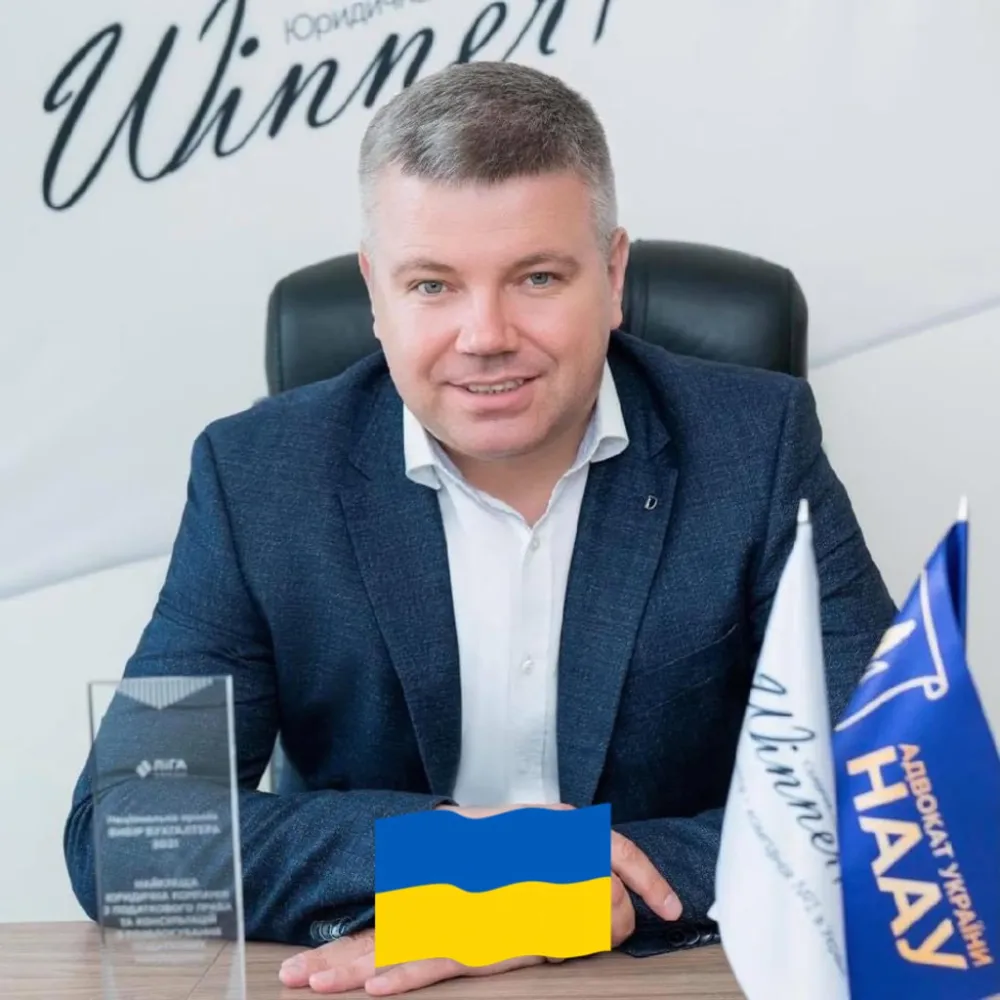
Prepared by: Yevhen Murchenko – Head of Criminal Law and Procedure Practice at the Law Firm Association “WINNER Legal Company.”
At the bottom of the video is a video lecture by Yevhen Murchenko.
Потрібна допомога адвоката?
Залишай заявку

- Усі права захищені