Author name: admin

Без рубрики

The Cabinet is changing its approach to inspections: focus on risk management

The Cabinet of Ministers of Ukraine is changing its approach to inspections, emphasizing risk management as the strategic basis for reforming the system of state supervision. This approach is increasingly used in developed European countries, and Ukraine is now integrating these mechanisms to improve efficiency, reduce administrative pressure on businesses, and foster a transparent economic environment. From Moratorium to Selective ControlIn 2025, against the backdrop of martial law and a critical phase of economic transformation, the President and Cabinet launched a new wave of changes in business oversight. The key focus is a selective approach to inspections, based on risk orientation. Prior to 2025, Ukraine had already applied risk-based planning for tax audits, but these mechanisms were not comprehensive and often lacked proper practical implementation. Presidential Decree No. 538/2025 and the related NSDC resolution provide for a moratorium on unwarranted business inspections. For businesses, this means shifting from mass inspections to a model where control is applied only to companies with a high risk of violations. Inspections for economic entities with Authorized Economic Operator (AEO) status or low risk are significantly restricted. What is Risk Management in SupervisionA risk-oriented approach assumes that all inspections must result from an objective risk assessment, not just a formal presence on the inspection schedule. State agencies analyze business activity data, sectoral trends, and violation indicators to create inspection schedules prioritizing suspicious or “problematic” enterprises. This system is based on: Using corporate and sectoral statistics for early identification of risk factors (opacity in reporting, financial instability, suspicious cross-border transactions, etc.); Digitization of procedures – integrating risk monitoring into automated platforms (including the Integrated Automated State Supervision System); Synchronizing the actions of various supervisory and financial agencies to avoid duplication of functions. Impact on Businesses: What Will ChangeThe new Cabinet policy brings Ukraine closer to EU standards, where inspections are targeted and do not create unnecessary pressure for compliant businesses. The biggest beneficiaries are companies with a low-risk profile and those with AEO status, as they can only be scheduled for inspections if there are substantial grounds. Meanwhile, for businesses in the “risk zone,” control will become stricter. This concerns excisable goods, smuggling, and tax evasion. Through automatic analysis of financial statements, transactions, and data from information systems, tax and customs bodies focus on “problematic” areas. As a result, unscrupulous businesses are under constant monitoring, and inspections may become more in-depth. Administrative Changes and System DigitizationA crucial part of the reform is digitizing inspection coordination mechanisms. The Cabinet has committed to launching integrated supervisory modules, where information on scheduled and unscheduled inspections is synchronized between agencies. Such coordination platforms will: Prevent duplication of inspections by different supervisory institutions; Reduce administrative costs for businesses; Rapidly inform enterprises of planned inspections; Ensure transparency and simplified procedures. Tax authorities plan inspections annually, while customs authorities plan quarterly. The State Financial Inspection also forms its quarterly plan, considering customs and tax administration data, allowing for better allocation of control system resources. Expected Effects and ChallengesIntroducing a risk-oriented approach offers several advantages: Reducing unwarranted inspections and administrative burden; Optimizing state expenses and resources; Increasing business trust in the state and improving Ukraine’s investment appeal; Forming a transparent, competitive ecosystem focused on rule of law and self-regulation. Risks include the imperfection of risk analysis algorithms, misidentification of risk profiles, or insufficient data digitization. To prevent abuses, the Cabinet implements regular audits and updates the regulatory framework. Outlook for Ukraine’s Market in 2026Changing the inspection approach places significant responsibility on businesses – companies must monitor their transparency and ensure corporate and tax policies comply with standards of integrity. This encourages internal organizational changes, development of risk self-assessment mechanisms, and quality internal auditing. At the same time, deregulation by restricting inspections for low-risk businesses opens new opportunities for SMEs, accelerates business activity, and promotes job creation. ConclusionsReforming the supervision system by the Cabinet of Ministers of Ukraine in 2025–2026 is a systematic shift from total inspections to intelligent risk management, reflecting the world’s best practices. The effectiveness of this model depends on the quality of digital platforms, risk analysis methodology, and the dialogue between state and business. Company owners have solid reasons to monitor their own risk profiles, as self-control and transparency are becoming the new guarantees of stable operations. The Ukrainian market is approaching a modern European model of interaction between supervisory agencies and businesses, with an emphasis on partnership, transparency, and responsibility. Author — Maksym Bahniuk, Head of Tax and Customs Law Practice, Law Firm “WINNER”. https://youtu.be/rEd6me-Ume4?si=8FZ6r_uofeedgzrj

Без рубрики

New car sales rules: how fuel and CO₂ information requirements changed in 2025

In autumn 2025, new, EU-style rules for selling new passenger cars came into force in Ukraine: now sellers must provide buyers with official information on fuel consumption and CO₂ emissions for each model. The reform is designed to increase market transparency, protect consumer rights, and implement Ukraine’s climate commitments. Background for Legislative ChangeThe main motive behind the reform was to harmonize Ukrainian information policy standards in the transport sector with EU requirements (Directive 1999/94/EC). These rules have been in place in Europe for over 20 years, aiming to: protect consumers when buying a car; promote eco-mobility and reduce the environmental impact of transport; foster fair competition. For Ukraine, this is another step towards European integration, reducing deception in the market and encouraging buyers to choose based on efficiency and environmental factors rather than branding or image. What Sellers Must ProvideThe new rules apply only to the sale of new passenger vehicles (previously, such data were usually provided by importers and large showrooms): Label next to each vehicle. In showrooms, each vehicle must have an A4-sized label displaying the model, fuel type, official fuel consumption (liters per 100 km, rounded to a single decimal), and official CO₂ emissions (grams per kilometer, g/km). Posters/electronic displays. There must be a poster or electronic display in a prominent place listing all models available in the showroom, with corresponding consumption and emission data. Advertising and promotional materials. All print brochures, leaflets, internet advertisements, and other marketing materials must include data on fuel consumption and CO₂ emissions, and these figures must be as visible as the main content. Electronic directory by the Ministry of Economy. The Ministry of Economy will annually update an electronic directory with official data for all car models, available online for customers and experts. How This Makes Customer Choice More InformedSuch a policy ensures every buyer receives standardized, reliable information about future running costs, encouraging the selection of more economical and environmentally friendly models. Market transparency motivates manufacturers and dealers to improve technical characteristics, while advertising can no longer conceal inefficiency or high pollution as every figure is audited by the Ministry of Economy. Customer Recommendations and EducationPart of the new standards is an interactive online directory featuring not only numerical data, but also tips for economical driving, maintenance, tire pressure, and efficient car operation. Proper vehicle use can significantly reduce real fuel expenses and CO₂ emissions. Features for Small Sellers and DealersThe new rules come into effect 9 months after their publication, to allow all showrooms and small dealers to adapt, update materials, and align internal processes. Perspectives and European Integration BenefitsIntroducing uniform market information standards stimulates: increased customer trust and protection; preparation for transition to electric vehicles or hybrids; compliance with EU environmental quotas and requirements; simplified export and import of cars; clearer competition between car brands. ConclusionThe new car sale rules, requiring full disclosure of official fuel consumption and CO₂ emissions, implement European transparency standards, place responsibility on marketing accuracy, protect consumer rights, and take a real step towards reducing the impact of automobiles on Ukraine’s environment. An informed choice means less resource use and cleaner air for all. Author: Ihor Yasko, Managing Partner of “WINNER” Law Firm, PhD in Law. https://youtu.be/k2-1dq7hxcY?si=WVENGeCVR7P-amhi

Без рубрики

Budget VAT refund: procedure, conditions and risks for business in Ukraine

The right to budget reimbursement of VAT (value added tax) in Ukraine belongs to registered VAT payers – legal entities and individual entrepreneurs on the general taxation system who meet all tax requirements, have no debts to the budget, conduct transparent activities, and declare a negative value between the tax credit and tax obligations for the reporting period. To obtain reimbursement, these persons must correctly submit the declaration along with an application and document the input VAT, in particular on the basis of registered tax invoices in the Unified Register. Who is eligible for budget VAT reimbursementBudget reimbursement is available to the following categories: Registered VAT payers – enterprises, organizations, individual entrepreneurs on the general system. Permanent representative offices of non-resident VAT payers. Exporters of goods/services (at zero VAT rate for exports). Entities engaged in capital construction/investment with large amounts of input VAT.Individuals (citizens who are not entrepreneurs) and entrepreneurs on the simplified system (for example, groups 2-3 without VAT) have no right to reimbursement. Basic requirements for obtaining reimbursementTo use the right to VAT reimbursement, a business entity must meet several requirements: Be registered as a VAT payer with active status in the Unified Register of Tax Invoices. Have no tax debt or penalties. Properly form the VAT declaration, where the negative value is confirmed by all records. Provide a complete package of primary documents for purchased goods, works, services (contracts, acts, invoices, payment documents). Submit an application for budget reimbursement, fill out annexes D3 and D4 to the declaration. All tax invoices must be registered in the Unified Register and correspond to actual business activity. The company’s payroll must be not lower than the minimum wage set by law for the relevant year. The enterprise must not be undergoing bankruptcy or liquidation. When does the right to reimbursement ariseThe right to budget reimbursement arises only if there is a “negative value” – when the amount of the tax credit exceeds VAT payment obligations for the reporting period. This happens in cases of: export transactions with a zero VAT rate; investment expenses when equipment is purchased or a new object is built, etc.; modernization of production with large investments in materials and fixed assets. Budget reimbursement procedure Submission of VAT declaration – the negative value between the credit and obligations is recorded. Submission of an application (attachments D3/D4) – for the return of overpaid VAT, indicating the amount. Inspection by regulatory bodies – the State Tax Service analyzes documents, the reality of transactions, HR indicators, availability of tax invoices, etc. Entry of the application into the public register of VAT refunds – since 2017 Ukraine has a unified register, applications are entered automatically by submission date and considered transparently. Return of funds – after inspection, the funds are credited to the taxpayer’s account or offset against future VAT payments. Control over reimbursement – the enterprise can check the status of the application in the register or contact the tax authority. Typical restrictions, grounds for refusalThe right to budget reimbursement is blocked or suspended if: fictitious transactions or supply chain breaks are identified; supporting documents are missing or the declaration is incorrectly filled out; there are tax debts or complaints regarding wages at the enterprise; requirements for invoice registration in the Unified Register are not met; the payer is in the process of liquidation, bankruptcy, or annulment of status. Mechanisms for transparency and business rights protectionSince 2017, Ukraine has an open register of VAT reimbursement applications that fixes the order of execution and minimizes corruption risks. Documents are automatically verified by regulatory authorities. Decisions to refuse reimbursement can be appealed administratively or in court. Practical recommendations for business entities Audit your tax credit before submitting the declaration. Carefully collect and store primary documents confirming actual transactions. Avoid tax “breaks” and fictitious counterparties. Check the timely registration of invoices. Monitor HR data so that wages meet minimum standards. Track the status of the application in the register and, if necessary, prepare substantiated complaints. ConclusionThe right to budget VAT reimbursement is an important tool for supporting business and export-oriented companies, allowing them to preserve working capital and develop investment activities. However, it is available only to disciplined taxpayers operating transparently, preparing documents properly, and meeting tax law requirements. Compliance with all criteria and proper preparation is key to guaranteed VAT repayment. Author — Maksym Bahniuk, Head of Tax and Customs Law Practice at the Law Firm “WINNER”. https://youtu.be/rEd6me-Ume4?si=8FZ6r_uofeedgzrj

Без рубрики

Electronic employment record book: what changes for employees and employers before 2026

The digitization of employment record books has become one of the key reforms in the field of social protection and labor relations in Ukraine in recent years. The transition to an electronic format is carried out in accordance with Law No. 1217-IX, which entered into force in June 2021 and provides for a five-year transitional period — until June 10, 2026. For Ukrainians, this process has become not only a requirement of the times but also a safeguard against the loss of insurance periods, the risk of lost pension entitlements, and a simplification of employment procedures. Reasons for Implementing the Electronic Employment Record BookThe traditional paper employment record book has long served as the main proof of employment history and a basis for pension payments. However, this format had several drawbacks: loss of documents, damage, forgery, or obstacles to quick pension processing. Especially during the war, many people lost their original documents or did not have access to them. The transition to the electronic employment record book is not just a step towards a digital state, but also a guarantee of preserving information about employment periods, protection of personal data, greater efficiency in the provision of public services, and convenience for both employees and employers. Ultimately, all data must be stored in the State Register of Insured Persons of the Pension Fund of Ukraine and be available online at any time. Deadlines and Who Initiates DigitizationAll employment information must be transferred to electronic format by June 10, 2026. Both the employee and the employer (including individual entrepreneurs and legal entities) can be responsible for digitization. The system is designed so that the individual can independently monitor whether their employment data have been submitted. How to Digitize Your Employment Record Book YourselfThe process consists of several steps: Register on the electronic services portal of the Pension Fund of Ukraine (https://portal.pfu.gov.ua/) using an electronic signature or BankID. Scan or take quality photos of all pages of the employment record book and documents confirming insurance periods before 2004. Upload the scans/photos in chronological order when filling out the online form on the portal. Wait for confirmation that the information has been entered into the register. All digitized entries are signed with an electronic signature, making forgery impossible. After confirmation, all entered information can be viewed at any time in the “Electronic employment record book” section on the portal, and its accuracy checked. Digitization by EmployerThe employer can also scan pages of employees’ record books, submit data through the corporate account of the Pension Fund, and employees can view this information in their personal account. It is important to ensure that all entries are transferred, especially those related to employment before 2004 and documents confirming employment periods: diplomas, military IDs, children’s birth certificates, etc. Audit and Preparation of the Record BookBefore scanning, it is necessary to carefully check the accuracy and integrity of all entries, the absence of corrections and incorrect personal details. If there are errors or discrepancies with the passport, they must first be corrected at the HR department or with the employer. The title page must not have abbreviations, names must be fully written out, and birth dates must match passport data. The Importance of Correctly Entering Employment DataIn the electronic format, it is especially important to enter all information on insurance periods, as it is the basis for pension calculation. If any information is missing, or there are formal errors in dates or records, the person risks losing part of their employment history. In such cases, one can contact the territorial office of the Pension Fund or submit an electronic request for correction. Consequences of Late DigitizationThere is a real risk of loss of insurance periods or inability to confirm periods of employment, especially before 2004. This can result in delayed pension payments or a reduction of total credited periods. After the deadline, restoring lost paper documents is often impossible, so digitization now protects the pension rights of future retirees. What Else You Should Know After digitization, the paper record book becomes an archival document. Scans can be submitted personally or by the employer. Digitization is also required for individual entrepreneurs. If combining several jobs, it is necessary to obtain entries from each place of work. From 2026, new employment can be arranged without a paper employment record book. The system minimizes fraud and falsification of employment periods. Stages and Benefits of the Electronic Record Book for the State and Individuals Access to employment history from anywhere in the world. Simplification of pension appointment procedures and reduction of bureaucracy. Automation of many state services in the social protection sphere. Increased employer transparency – only genuine employment periods are recorded, eliminating shadow schemes. Possibility of keeping both paper and electronic record books during the transition period. ConclusionThe digitization of the employment record book is a step towards a digital Ukraine that ensures protection of employment rights, transparency, and convenient online access to crucial future information. After June 10, 2026, the electronic version will become the only legally valid confirmation of employment activity, so it is important not to delay and undergo all digitization procedures promptly. Svitlana Krutorogova — attorney, Legal Company WINNER. https://youtu.be/k2-1dq7hxcY?si=WVENGeCVR7P-amhi

Без рубрики

New tax invoice registration rules 2025: how the changes in Resolution No.1048 will affect business

From September 27, 2025, new rules for the registration of tax invoices and adjustment calculations in the Unified Register of Tax Invoices (URTI) come into force in Ukraine, introduced by Cabinet Resolution No. 1048. Their purpose is to reduce bureaucracy, increase procedural transparency, and make the VAT administration system more business-friendly, especially for small and medium-sized enterprises. Below is a complete analytical overview of the key changes, their practical significance, and their potential impact for business. Why Are Changes Needed?Widespread criticism and dissatisfaction over mass blocking of tax invoices and vague risk criteria have long hindered honest business in Ukraine. Frequent, non-transparent registration stoppages of tax invoices created additional burden and risk for taxpayers, especially SMEs, exporters, and companies from high-risk regions. Taking this into account, the government now shifts its focus towards encouraging bona fide payers and reducing invoice blockages. Main Changes from September 27, 2025The reform contains several comprehensive innovations affecting both general limits for invoice registration and specific procedures for certain taxpayer categories: Increase of Limits for Unconditional Invoice Registration: The monthly supply threshold for unconditional registration increases to UAH 1 million (previously UAH 500,000). The counterparty limit is now UAH 100,000 (was UAH 50,000). Changes for Low-Value Transactions: The threshold for a single invoice for small transactions rises from UAH 5,000 to UAH 10,000. The total volume of such transactions for one payer per month may now reach UAH 3 million (previously UAH 500,000). Changes in Risk Assessment and Managers: Expanded conditions allow one individual to be a director in up to 5 companies (instead of 3) without automatic “risk” recognition. Risk criteria for region and sector have been clarified. New Rules for Exporters and Companies from Risk Areas: Requirements for unconditional registration of invoices on export operations—especially for businesses in risk zones (excluding active war zones)—have been significantly liberalized. Return of goods from non-VAT payers allowed up to 90 days without automatic risk classification (previously 30 days). Liberalization for Sole Proprietors and Microbusinesses: Higher limits and simplified criteria will have a particularly positive effect for sole proprietors (FOP) and small businesses. How Will the Registration Procedure Change?Tax invoice registration will continue via electronic form completion and a qualified e-signature. The invoice is then sent through the VAT administration system to the State Tax Service for inclusion in the register. However, with updated risk criteria and higher limits for certain transactions, the likelihood of automated suspension or blocking is now minimized. Strategic Business Implications Fewer blocks—fewer losses. More transparent and liberal limits let businesses plan transactions without sudden halts, reducing cash flow delay and risk of sanctions. SME support. The updates make business easier for sole proprietors and companies with medium/low operation intensity, who often fell under “suspicion” due only to transaction counts or small values. Improved investment attractiveness. Reduced bureaucracy enables resources to be directed toward business development, not legal disputes or invoice blocks. Who Will Be Most Affected? Entrepreneurs and SMEs with numerous transactions near the old thresholds. Directors with multiple businesses and companies in border/risk regions. Exporters and businesses with an extensive counterparty network. Potential Issues and Further Considerations Implementation will not be instant: IT systems must adapt, accountants must be trained, and internal rules updated. Risks of blocking may still exist for large amounts or specific industries. ConclusionThe updated rules are a decisive step towards transparency, liberalization, and support of bona fide business in Ukraine. In the near term, these changes will simplify life for sole proprietors, SMEs, exporters, and companies from higher-risk areas, reducing losses and freeing up “frozen” funds from invoice blocks. Such steps make Ukraine more attractive for investment and give businesses more confidence and stability. Author — Maksym Bahniuk, Head of Tax and Customs Law Practice, Law Firm “WINNER”. https://youtu.be/rEd6me-Ume4?si=8FZ6r_uofeedgzrj

Без рубрики

Unified Pharmaceutical Regulatory Authority: Reform for a Transparent and Safe Medicines Market in Ukraine

The pharmaceutical market in Ukraine has long remained one of the most competitive yet problematic sectors of the economy. On the one hand, it provides millions of citizens with vital medicines, generates significant tax revenues, and integrates into international standards; on the other hand, it is characterized by corruption risks, uneven access to quality drugs, shadow imports, and constant scandals over government procurement. In these circumstances, the idea of creating a unified state regulatory authority in pharmaceuticals, which can ensure market transparency, the control of medical products quality, and consumer rights protection, is becoming increasingly relevant. Why is a new authority needed?Today in Ukraine, pharmaceutical market control is exercised by several institutions with partially overlapping powers. In particular, the Ministry of Health shapes policy and issues regulatory documents, the State Service for Medicines and Drug Control inspects the circulation of drugs, while the State Tax Service and customs bodies oversee the financial and customs segment. This fragmentation leads to duplicated functions, blurred accountability, and decision-making delays. According to civil society organizations, hundreds of cases of counterfeit medicines occur in Ukraine every year. There are also issues with registering new drugs, which often takes years due to bureaucratic barriers and frequent cases of undue benefit requests. EU experience shows: the most effective model is the presence of a dedicated authority responsible for quality control, licensing, market monitoring, and cooperation with international institutions. Possible functional structure of the new authorityThe state pharmaceutical control authority should be granted comprehensive powers for centralized management. Its functions can be divided into several blocks: Regulatory block: licensing the activities of pharmacies, distributors, and drug manufacturers; supervision of pharmaceutical companies’ compliance with production standards; approval of drug circulation rules. Inspection block: checking the quality of medicinal products at all stages, from import to retail; performing laboratory analyses; monitoring storage and transportation conditions. Monitoring block: creating a national database of medicines with information on original and generic drugs; cooperation with customs and law enforcement to detect counterfeits. Sanctions block: applying fines, temporary suspension of market actors, revocation of licenses, informing law enforcement about serious violations. International coordination: integration into EU systems, cooperation with the European Medicines Agency, adoption of European GMP, GCP and pharmacovigilance standards. Legislative frameworkLaunching the new authority requires significant amendments to current legislation. First, a new law “On State Control in Pharmaceuticals” must be adopted to clearly define the authority’s remit, its accountability mechanism to the Cabinet of Ministers, and interaction with other state bodies. Additionally, Ukraine’s “Medicines Act” should be amended to introduce European-style procedures for drug registration, clinical trial oversight, and pharmacovigilance. A key issue is the accountability and independence of such an authority. If it is merely a Ministry of Health division, there may be risks of political influence and administrative pressure. Therefore, an option is to create a central executive authority with a special status that is guaranteed independence in making regulatory decisions. Benefits for the state and societyCreating a specialized authority will allow the achievement of several strategic goals: Protecting public health: regular oversight will reduce the risk of dangerous or counterfeit drugs entering the market. Public trust in healthcare: citizens will be confident that medicines purchased are safe and high-quality. Market transparency: eliminating duplication of functions and implementing uniform standards will facilitate business and reduce administrative pressure. Harmonization with the EU: implementation of European practices will open opportunities for investment and help Ukrainian manufacturers enter international markets. Fighting corruption: standardized procedures and digitalization will reduce opportunities for administrative abuse. Potential risksAt the same time, establishing such an authority is associated with several challenges. First, there is a risk of bureaucratization; the new structure may duplicate current agencies’ functions if powers are not clearly delineated. Second, creating a modern laboratory base will require significant budgetary spending, and lack of funding may result in the authority’s formal existence only. Third, initial resistance may occur from pharmaceutical companies and certain officials losing control over lucrative flows. Staffing is also critical – effective operation requires highly qualified specialists in pharmacy, international law, and standardization, who may be lacking in the public sector due to low salaries. European experienceIn the European Union, drug control is exercised by the European Medicines Agency (EMA), which serves as a model for many national systems. It is responsible for the scientific assessment of medicines, post-marketing surveillance, and cooperation with national authorities of member states. Such structures operate in Germany, France, Poland, Italy, providing a full range of oversight functions: from inspections to adverse drug reaction systems. Ukraine can draw on Poland’s experience, which established the Chief Pharmaceutical Inspectorate – an independent body with wide powers, separate from the Ministry of Health. Centralization enabled Poland to quickly introduce European rules and integrate into the EU’s pharmacovigilance system. Prospects for UkraineGiven society’s demand for safe medicines and a transparent pharmaceutical market, establishing a unified control authority appears to be a logical reform step for the healthcare system. This requires political will, dedicated legislation, financial guarantees, and staffing strategy. If these are met, Ukraine will gain a modern state regulatory system capable of reducing corruption, improving citizens’ quality of life, and gradually integrating into European pharma infrastructure. Ultimately, the new authority may not only become a control tool but also a catalyst for industry development, ensuring a balance between the interests of the state, business, and society. Author: Ihor Yas’ko, Managing Partner, Law Firm “WINNER”, PhD in Law. https://youtu.be/k2-1dq7hxcY?si=k4z8bx3TY0wjq552

Без рубрики

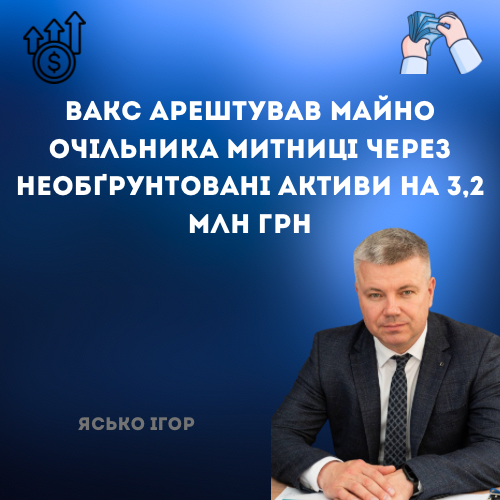
SAPO lawsuit regarding unjustified assets of the State Customs Service head: key details and legal implications

2025 has become another stage in strengthening anti-corruption efforts among civil servants in Ukraine. The main focus of society and experts is on systemic violations within large public agencies, particularly the activities of the State Customs Service, traditionally considered one of the most vulnerable sectors for abuse. One of the most high-profile cases was the SAPO’s announcement of a claim to the HACC regarding unjustified assets, which, according to NABU materials, were used by the current head of the State Customs Service, Serhii Zviahintsev, amounting to over 3.2 million UAH. Essence of the case: defining unjustified assetsThe claim concerns real estate — a residential house of 236.8 sq.m and a land plot near Kyiv. Officially, this property was registered in the name of a close relative of the official’s wife, but, according to investigators, it was Zviahintsev and his family who were its actual users and managers. An analysis of cash flows, the level of legal income, and total family expenditures did not allow for a reasonable explanation of the source of these assets. This approach matches a new procedure for establishing the objective inconsistency between assets and income, without the need for a criminal finding of guilt. Court proceedings and asset seizure mechanismAt the preparatory stage, the HACC (High Anti-Corruption Court) decided to “seize” disputed assets as a measure to secure the claim. This is standard practice for such cases, preventing potential alienation or concealment of property during judicial review. The attachment is imposed based on an SAPO prosecutor’s motion, and the state is represented in court by anti-corruption prosecutors. Legal basis: what are unjustified assetsThe legal category of “unjustified assets” entered Ukrainian legislation with the adoption of a package of anti-corruption norms. These norms provide not only for prosecution for illegal enrichment within criminal proceedings but also for civil confiscation of property through the courts if an official cannot confirm the legality of acquiring substantial assets. Under the law, any assets the official or their family cannot verify with legitimate sources of income can be recognized as unjustified and recovered for the benefit of the state in civil proceedings. Investigation practice and evidenceIn the case of the Customs Service head, NABU materials and financial-analytical monitoring were decisive. The following were carefully investigated:— Real estate purchase transactions— Financial flows among the subject, relatives, and persons with similar social ties— Official declarations inconsistent with actual well-being— The objective value of assets was correlated with real incomeThe evidentiary standard here is lower than in criminal cases: it is sufficient to show a gap between income and acquired property. Asset seizure: legal and social consequencesAsset seizure at the prosecutor’s request is not just a precaution, but also a signal to all government actors regarding increased accountability. If the claim is upheld, this practice allows eventual confiscation of assets for the benefit of the state, not just penalties for individual officials. Society sees this as a significant step toward real de-oligarchization of the customs system and gradual cleansing of the state apparatus. Significance for the anti-corruption systemThe SAPO claim against the head of the State Customs Service has become a test for the entire anti-corruption judiciary and the practice of civil asset confiscation in wartime. Importantly, the decision was prepared with the new standards of transparency in income declaration and spending oversight in mind, reflecting ongoing sector reforms. A decision for the state would significantly enhance both SAPO’s and HACC’s work and create a precedent for further cases of this type. Prospects after the court decisionIf the claim is satisfied and the assets are finally declared unjustified, the property will be transferred to the state, but respondents will retain the right of appeal. The practice of such court decisions demonstrates how governmental de-oligarchization is not just declared, but produces real results. Risks and challengesAt the same time, such cases carry risks:— Possibility of the mechanism being used for political pressure on opponents— Uncertainty over final property rights in case of appeals and ECHR review— Potential conflicts in valuing assets and sources of incomeIt should be remembered that the civil confiscation mechanism is based on the presumption of innocence; thus, to seize assets, it is sufficient to fail to prove the legality of means, rather than prove a crime. ConclusionThe SAPO claim and the HACC’s response regarding the seizure of the head of the Customs Service’s assets is a powerful signal for the entire system of state governance. This precedent-setting case is crucial for cleaning up the government and establishing true anti-corruption justice in Ukraine. Successful resolution in favor of the state will mark a landmark in customs reform and strengthen public trust in anti-corruption institutions. Author: Ihor Yasko, Managing Partner of “WINNER” Law Firm, PhD in Law. https://www.youtube.com/watch?v=k2-1dq7hxcY&t=2s

Без рубрики

Hetmantsev explained how the rules for documenting certificates of completed work will change in 2025

The preparation of certificates of completed work/provided services is a key but often problematic part of accounting and contractual document flow in Ukraine. These documents record the fulfilment of business obligations and form the basis for payment, legal protection, and tax accounting. Starting from 2025, significant changes are expected in regulatory and practical requirements for their preparation. Reasons for legislative changesIn recent years, businesses have complained about administrative barriers: duplicate signatures, bureaucracy of paper act execution, and counterparties abusing signing delays. The problem has intensified in IT, consulting, marketing, and other services where the actual result has no clear material form and payments are often made cashless.The implementation of cashless procedures, the increase in digital reporting, and alignment with European practices have prompted reforms of acts as primary documents. Key innovationsThe government proposes to simplify the procedure for acts for services paid to a settlement account. Main changes include: No mandatory signature from the client, unless specified in the contract; Only the executor’s signature is required to confirm completion; Double signing remains possible at the discretion of the parties (contractual freedom). Practical implementation and documentationAccording to the updated Law of Ukraine “On Accounting and Financial Reporting,” for most cashless services, the executor’s act is sufficient for bookkeeping and tax purposes. Complex works or material deliveries still require both signatures.For electronic documents: Use of a qualified electronic signature (QES) becomes compulsory for legal validity; Documents must be stored for at least three years; Authenticity and integrity of the signature are controlled via M.E.Doc, SOTA, Paperless, and others.Important: a scanned paper act without a digital signature is invalid for tax purposes! Mandatory details in 2025Despite simplification, acts must include: Name of document (“Certificate of Completed Work”/“Certificate of Provided Services”); Date and place, act number; Counterparty (full name, details, EDRPOU code); List and scope of work/services, their purpose, period; Value, VAT items (if required); Executor’s position, full name, possible e-signature; Contract reference.As needed, specifications, photo documentation, detailed reports are attached as evidence of actual transactions (relevant for IT, consulting). Abolition of acts for some servicesMajor innovation — simplified procedure for cashless transactions. If service is paid to a bank account, the executor’s act (with a single signature) serves as the primary document. This reform could save up to 20.2 billion UAH annually by reducing business process bureaucracy.In court disputes or tax claims, the act remains the main written proof of obligation fulfilment, so accuracy is essential. Business challengesSimplification brings new risks: Increased responsibility for data accuracy for the executor; Counterparties must correctly record facts via electronic channels; More audit of paperwork and tax matching is needed; Importance of verifying parties’ identities, especially in major corporate deals. Judicial and tax reviewCourts recognize electronic acts with QES as equal to paper ones with signatures and seals. It is essential to ensure an unbroken chain of evidence: contract, act, payment. The fact of receipt or transfer is often supported by photos/videos, correspondence, reports — especially in remote services, IT, engineering.The tax service focuses on real transactions – simple “titles” are no longer enough; detailed content, standardized fields, contract references, and precise execution periods are required. Acts lacking detail may be found invalid. Documentation review and updateLegal experts recommend: Regularly reviewing structure/content of acts, contracts, specifications; Updating templates to comply with new legislation and e-reporting; Implementing electronic identification, automated field checks, contract condition control. Development prospects and additional toolsAs acts become personalized contract annexes, businesses should use: Electronic archives with a three-year retention; Automated approval/notification systems (bots, CRM, document platforms); Logging agreement and receipt via digital channels. ConclusionThe change in rules for documenting completed work is a strategic step toward simplification, digitalization, and business protection.A modern act is a flexible tool to confirm obligation completion, payment, and proof for courts and tax. In 2025, acts will become more personalized, electronic, detailed, and government-controlled, and their proper content and arrangement will be vital for business security in the long term.Author — Maksym Bahniuk, Head of Tax and Customs Practice, WINNER Law Firm. https://youtu.be/rEd6me-Ume4?si=Lu_NdvLTZ7Bdt-4J

Без рубрики

Police prepares tougher penalties for traffic violations: what will change in 2025

Ukrainian police are preparing a sweeping increase in liability for violations of road traffic rules in 2025. This is a key stage in major changes to the road safety system, aimed at reducing accidents, strengthening legal discipline among all road users, and raising the level of public responsibility. Reasons for tightening legislationRising numbers of road accidents and fatalities, coupled with a high percentage of drunk driving, have prompted the government and law enforcement agencies to respond with tougher penalties. Statistics show that the inevitability and severity of punishment are crucial factors in changing road behavior, as confirmed by international experience. Main bills: new fines and sanctionsThe Patrol Police have already drafted several bills introducing new rules and penalties. These apply to drivers, pedestrians, owners of e-scooters, and other road users.‘Drunk driving’: mandatory evacuation of the car to an impound lot, fines of up to 51,000 UAH, license revocation, and under martial law even vehicle confiscation in favor of the Armed Forces.‘Drifting’: fines up to 17,000 UAH and license revocation.‘Noise violation’: fines up to 34,000 UAH.‘Systematic violations’: repeated offenses such as running red lights, illegal overtaking, or improper crossing — heavy fines and possible license revocation.‘Speeding’: fines now start from +10 km/h over — from 340 to 3,400 UAH depending on the extent of excess. New requirements and standards for road usersThe reform is not limited to higher fines: it also stresses the regulation of personal electric vehicles and discipline for pedestrians.‘E-scooters’: clear movement rules and penalties for violators, making city travel safer.‘Tires’: mandatory use of winter/all-season tires, fines up to 8,500 UAH, license revocation for repeat violations.‘Pedestrians’: mandatory use of reflective elements at night or when visibility is poor.‘Penalty points’: introduction of a points system for each violation, gradually leading to tougher sanctions and license revocation. Digitalization and increased transparency of controlModern technology is being used to improve the accuracy of violation enforcement: electronic road accident reporting is now in development and plans for a unified database will allow better accident analysis and preventive measures. Educational and information campaignsAlongside tougher penalties, the police plan major education campaigns for schoolchildren — mandatory road safety basics — and encourage citizens to report violations via digital services. Conclusion: expected outcomes of the reformsThe reform is aimed not only at punishment but also at fostering a sense of inevitable responsibility and public intolerance toward traffic violations. It is expected that stricter sanctions, new technologies, and educational work will significantly decrease the number of accidents, save lives, and raise awareness among all road users in Ukraine.Author: Ihor Yas’ko, Managing Partner, ‘WINNER’ Law Firm, PhD in Law.” https://youtu.be/k2-1dq7hxcY?si=HszHMtiNQktlZ564

Без рубрики

Use of sole proprietor funds for private needs: how to stay within the law

Under Ukrainian law, funds in an individual entrepreneur’s account are considered business income, but they cannot be used without restrictions for personal needs. The main rule is that personal expenses are allowed only after officially withdrawing profit: transferring money from an individual entrepreneur’s account to a personal card with the correct payment purpose (“payment of net income after taxes are paid”). Legal basis and NBU interpretationSince 2020, the NBU officially allows FOPs to use funds from the business account for personal needs under two conditions: payment of all taxes and USC due on the income; transferring funds from the business account to the individual’s personal account or another personal card. This means profit can be withdrawn and spent on personal needs, but direct payment of personal expenses from the FOP account is a gross violation and carries tax risks. Payment of personal purchases, utilities, or loans directly from the FOP account is treated by the tax authority as undeclared income and may trigger additional personal income tax (18%) and military levy (5%). Risks and supervision by tax authorities and banks Direct payment of personal needs from the FOP account is often considered tax avoidance. The bank may block the account for suspected money laundering or non-compliance with financial monitoring rules. Funds spent “not for business” are subject to personal income tax and military levy with all applicable penalties. Practical advice for FOPs Always transfer money to a personal card before using it for personal needs. Specify the payment purpose clearly: “Payment of income from business activity after tax payment.” Pay all taxes and levies before transferring funds. Do not pay for personal purchases or loans directly from the FOP account. If paying other individuals, withhold and pay personal income tax and military levy as a tax agent. Consult regularly with an accountant or tax consultant to avoid risks. Specifics of settlements with other FOPs and individualsPaying funds from a FOP account to another FOP for personal, not business, purposes is also questionable and requires additional accounting and tax justification. The recommendation is first to transfer money from the business to the personal account, then pay for personal services or purchases. Consequences of violationsPenalties for misuse of funds can be substantial—ranging from self-assessed personal income tax and levies to criminal responsibility for significant sums or deliberate concealment of income. ConclusionsA Ukrainian FOP can lawfully use business profits for personal needs, but only after fulfilling tax obligations and transferring funds from the business account to a personal card. Direct payment of personal expenses from the FOP account is risky and may lead to tax sanctions and bank blocking. It’s best always to document all transactions and keep personal and business finances separate. Author — Maksym Bahniuk, Head of Tax and Customs Law Practice at the Law Firm “WINNER”. https://youtu.be/rEd6me-Ume4?si=YISLaHkr1dujJdQX

Scroll to Top