Author name: admin

Без рубрики

The Ministry of Justice has gained access to banking secrecy

In August 2025, the issue of expanding the Ministry of Justice’s powers to access data classified as banking secrecy gained widespread attention in Ukraine’s information sphere. This decision is justified by the need to protect the state’s interests in international arbitration; however, its impact is much broader — both for the system of public administration and for citizens’ financial security. What changed in the legislation?Since August 2025, a legally enshrined mechanism has allowed the Ministry of Justice to address banks directly with requests to disclose information considered banking secrecy. However, this change has clearly defined boundaries: information can be obtained exclusively for representing the state’s interests in foreign jurisdictional bodies — primarily in international arbitrations where Ukraine is a party, especially in cases involving entities associated with the aggressor country.The new mechanism was introduced by a law that applies during martial law and for two years after its conclusion, making temporariness a fundamental feature of this norm. Lawmakers present this as an exceptional tool for protecting the country’s interests in a critical period. Reasons and motivationsBefore the law was amended, the state, despite its authority to represent Ukraine’s interests, often faced the problem of incomplete access to financial evidence that could be decisive in international litigation against the aggressor state or related legal entities. In recent years, Ukraine has repeatedly been a party to financial disputes abroad, and the absence of a direct mechanism for the Ministry of Justice to obtain such information significantly complicated its position in arbitrations. Now, the Ministry can request evidence for the protection of state interests more promptly and without additional procedures, thus avoiding bureaucratic obstacles. Current state of banking secrecy protectionUkraine maintains strict banking secrecy legislation; the main document is the Law “On Banks and Banking Activities.” According to this law, a bank cannot disclose information about transactions, accounts, or clients without their consent or proper legal grounds. Before the new 2025 amendment, such information could be accessed via:· Written request from the tax office;· A court order;· Enforcement proceedings;· A request from the NBU within its powers;· For the needs of law enforcement, anti-corruption, and supervisory authorities within the limits established by law. Disclosure of information about funds movement, a client’s financial status, or their personal operations almost always required a court decision. Each request was substantiated only in cases of exceptional necessity and had to be confirmed by a court or other competent authority. New procedure for the Ministry of JusticeWith the entry into force of the new provision, the Ministry of Justice now has a separate channel for accessing banking secrecy and can request data directly from banks — without the intermediary of a court or another state body. This refers to the transfer of specific financial data needed in cases involving Ukraine in international disputes. Officially, this does not concern ordinary citizens and does not violate constitutional guarantees of personal data protection.At the same time, experts emphasize that introducing this model will be accompanied by additional supervisory and auditing procedures for Ministry officials’ actions, and banks retain the right to verify the legality of every request. Risks and challengesThe most obvious risk is a potential threat to the right to financial privacy and the reputation of banks. Although the Ministry’s official mandate is limited to international disputes, this new practice may set a legal precedent for expanding the range of state authorities with similar access rights.There is a risk that under extraordinary conditions (martial law, emergencies), the exception could quickly become common practice and, in the future, this model may be adopted by other institutions. Therefore, civil society and human rights advocates are closely monitoring the new provision, demanding strict adherence to the principle of proportionality and robust guarantees for personal data protection.On the other hand, critics point out that among the risks is the potential use of this mechanism to pressure businesses or political opponents through the disclosure of their financial affairs under the guise of “international representation needs.” European and international contextAn equally important aspect is compliance with international financial privacy standards. The EU and OECD countries encourage clear mechanisms for banking secrecy disclosure to prevent money laundering, terrorism financing, and tax evasion, but impose strict restrictions on using such instruments for any other purposes.In most European countries, disclosure of banking information is allowed only by court order or for the purposes of fighting financial crime, and almost never simply upon state authorities’ requests without relevant justification and control. Ukraine is trying to balance EU transparency requirements with protecting basic civil rights. Impact on the financial system and trustMaintaining client trust is key to the banking sector. Expanding the instruments of access for state authorities can have both positive and negative consequences. On the one hand, this increases the state’s ability to protect its interests in major geopolitical disputes. On the other, it may erode trust in banking secrecy among businesses and citizens, especially if the limits of its application become blurred or insufficiently controlled. ConclusionsGranting the Ministry of Justice access to banking secrecy under the conditions stipulated by law is justified in the context where Ukraine’s economic security and standing in international courts are at stake. However, it is critically important that this extraordinary provision does not become standard practice after the war.Ensuring clear procedural safeguards, transparent audit procedures, and independent oversight will help prevent abuse and maintain a balance between the needs of the state and citizens’ rights. The Ukrainian case may serve as an example for other countries of how to seek compromise between national security and financial privacy during wartime and in the face of modern global challenges. Author: Svitlana Krutorohova – attorney at the law firm “WINNER”. https://youtu.be/k2-1dq7hxcY?si=aC82z21f4iNElsPQ

Без рубрики

STS SFMS and BES will enhance the information exchange mechanism

Pooling Resources for Financial SecurityIn 2025, Ukraine took a strategic step to strengthen financial security — the State Tax Service (SFS), Derzhfinmonitoring, and the Economic Security Bureau (ESB) signed a tripartite memorandum to improve the mechanism of information sharing on financial transactions. This cooperation aims not only to promptly detect tax evasion or money laundering schemes but also to increase the effectiveness of the entire law enforcement ecosystem. Reasons for Changes: Why Was Improvement Needed?In recent years, the volume of illegal financial flows has increased, and offenders are increasingly using complex IT solutions, cryptocurrencies, and international schemes. Previous experience showed that fragmented actions and closed databases allowed criminals to outpace the state. To respond to modern challenges, synchronized and transparent interaction between all financial bodies is required. What Does the New Mechanism Provide? Unified Information Exchange SystemThe SFS, Derzhfinmonitoring and ESB are developing a platform for swift data exchange, enabling:Faster identification of suspicious transactions;· Timely response to money laundering incidents;· Blocking of fictitious activities and financial intermediaries. Information exchange is moving from sporadic to systematic, with clear procedures, secure IT channels, and a “single request” standard via a state information system (e.g., “Trembita”). Joint Analytical GroupsThe memorandum establishes working groups comprising analysts from all three bodies. They jointly assess risks, work on new evasion schemes, prepare situation reports for management, and initiate deeper checks if data from different sources indicate violations. Exchange of Experience and ClarificationsTo enhance staff qualifications, regular trainings and consultations on law interpretation practices and identification of new threats are conducted. Practical Results: Tangible Changes in State Operations● More fraudulent schemes blocked: already in 2025, thanks to information access, the ESB and Derzhfinmonitoring promptly identified dozens of schemes and stopped illegal fund outflows totaling over 30 million UAH in a single year.● Progress in criminal cases: account blocking and better evidence bases turn delays into real results, increasing the number of cases going to court.● Shorter response times: the time from detecting a violation to actually blocking suspicious funds has dropped from weeks to days or even hours.● Improved analytics: synergy among all three agencies enables a fuller picture — from transactional activity and tax status to complex international chains. Legal Aspect and IT InfrastructureInteraction strictly complies with Ukrainian law — via comprehensively protected channels, using modern IT, and in line with cybersecurity requirements. Data exchange is based on a unified state electronic interaction system with built-in audit tools for transparency and protection against internal leaks. Benefits for Business and Society· Reduced corruption risks — businesses see predictable and uniform rules without creeping control.· Increased international trust in Ukraine’s financial system, facilitating banking operations, attracting investment, and cooperation with foreign regulators.· Flexible response to challenges — if offenders change tactics (for example, using new crypto tools), state agencies quickly update algorithms, share behavior patterns, and instantly revise risk profiles. ConclusionsThe joint initiative of the SFS, Derzhfinmonitoring, and ESB sets a new standard for state financial control quality. Its main idea is not to wait for violations but to prevent them. Flexibility, transparency, and rapid data exchange minimize budget losses and prevent the exploitation of loopholes for financial crimes. For Ukraine, this is a move toward advanced European standards in combating financial offenses, and a significant contribution to overall economic stability amid the extraordinary challenges of wartime. Author: Ihor Yasko, Managing Partner, Law Firm “WINNER”, PhD in Law. https://youtu.be/BAu08iebqrI?si=Q898E5qphSanqd13

Без рубрики

New Methods of the State Tax Service for Detecting Tax Violations

In 2025, the State Tax Service of Ukraine (STS) made a true technological breakthrough by introducing innovative methods and approaches for detecting and preventing tax violations. This was driven by serious challenges related to the growth of the digital economy, the spread of new financial instruments, and the real need to reduce administrative pressure on business. Below is an analytical review of key reforms and innovations in the practices of the STS. Automation and Digitalization of Control The main focus is on maximum automation of data collection, processing, and tax information analysis. In 2025: A unified electronic reporting system has been introduced: all taxpayers submit reports only through digital channels, with data immediately entering the STS analytical centers in real time. Automatic data comparison and validation: tax authorities use artificial intelligence algorithms to cross-verify indicators from various sources (reporting, bank data, market information, customs statistics), identifying discrepancies even without onsite audits. Shifting the Focus to Analytics and Risk-Based Approach The STS has made a major shift from “mass” checks to risk-based audits: Risk as a criterion: new risk codes and improved sets of criteria for risk-bearing taxpayers have been introduced. Focus is placed on tracking fictitious transactions, suspicious dealings between related parties, operations by companies without real addresses or resources, and export of goods of unknown origin. Automated analysis of tax credits and correction of relationships: discrepancies between tax invoices, VAT registration, etc., are systematically detected. This quickly blocks schemes involving artificial inflation of tax credits. IT Integration and Information Exchange In cooperation with the Economic Security Bureau and Financial Monitoring Service in 2025: “Trembita” Data Exchange Platform: transaction data exchange takes place via secure channels, with full audit tracking. Systematic exchange of operational data makes it possible to uncover not only classic “schemes” but also complex ones involving cryptocurrencies or latest IT tools. Integration of the STS with bank, customs, and market operator systems: enables tracing asset movement chains and matching suspicious movements. Combating Abuses in Online Commerce 2025 saw mass control over internet sales: Access to PPO data and banking payments: The STS can identify not only legally registered entrepreneurs but also “grey” market participants by analyzing bank transactions on individuals’ cards. Detection of business activity patterns: systems automatically monitor transaction regularity, track PPO use by individuals, and detect signs of hidden entrepreneurship. Tax Risk Management System Permanent monitoring and updating risk profiles: the STS risk appetite is continuously adjusted, adapting to offenders’ changing tactics (e.g., mass use of crypto assets or “shadowing” turnovers via new platforms). Use of external digital resources: The STS analyzes data from open state registers, market, social networks, and classified ad aggregators to map connections between entities and search for illegal trading/service platforms. Moratorium, Deregulatory Initiatives, and Balance Between Control and Trust Moratorium on unjustified audits: at the same time, the STS preserves the right to conduct only risk-based, well-motivated audits with full video recording and mandatory justification of interference, reducing administrative pressure on business. Involvement of business in developing audit criteria: the STS conducts open consultations, making audits more predictable and transparent. Raising Anti-Corruption and Compliance Standards Use of an employee action audit system: public and business monitoring of tax officers’ decisions, introduction of whistleblower tools. High level of cybersecurity: all IT systems undergo regular audits, with resistance to leaks of personal and official data regularly checked. Practical Results in the Shadow Economy Sphere This year the results have included: Dozens of “schemes” and shell companies blocked online. Notably increased additional tax charges due to fast automatic identification of fictitious transactions. Time from violation detection to actual blocking of suspicious activities has dropped from weeks to hours or days. The number of criminal proceedings reaching court has increased, due to high-quality evidence gathered using new algorithms. Conclusion: Transformation of Tax Management as the Key to Economic Resilience The STS practice in 2025 shows that combining digital technologies, analytics, automation, and transparent interaction with business and law enforcement enables effective counteraction to modern tax violations. The main priority is preventive, not punitive. Such methods boost compliance, strengthen public trust, and create conditions for a transparent, competitive Ukrainian economy under wartime and tighter international scrutiny. Key Highlights: The STS automates all processes of data collection and analysis. Risk identification forms the base for targeted inspections. Effective information exchange among agencies decreases “schematic” activity. E-commerce is under total digital supervision. Updated risk-management and compliance systems guard the economy against losses. Ukraine has started a new stage of tax control, maximally tailored to modern challenges and EU standards. Author: Ihor Yasko, Managing Partner, Law Firm “WINNER”, PhD in Law. https://youtu.be/rEd6me-Ume4?si=xtkh5T0IeCIdlIpS

Без рубрики

NABU is being restored Trust is lost forever

Ukrainian society has once again witnessed a dramatic twist in anticorruption policy: a legislative attack on the independence of NABU, a strong public response and wave of protests — and, eventually, broad parliamentary support for rolling back the law and restoring the procedural independence of anticorruption agencies. But can trust be regained as quickly as the “repair” law was passed? Unfortunately, the answer is clear — wounds remain, and the sense of irreversible loss of trust only becomes sharper. A brief overviewIn the history of Ukraine’s fight against corruption, July 22–31, 2025, will be remembered as the days that exposed the real state of trust between authorities and society. The decision of the Verkhovna Rada to support the scandalous law №12414, which sharply curtailed the independence of NABU and SAPO, became a fait accompli. The changes effectively turned these bodies into units of the Prosecutor General’s Office, depriving them of the ability to impartially investigate top-level corruption or serve notices of suspicion without the approval of politically appointed figures. The law also granted the Prosecutor General the right to seize high-profile cases, close proceedings against top officials, and directly control the subordinated anticorruption bodies. Social explosion: the public responseThe very next day after the vote, the active part of civil society spoke out: a wave of protests swept Kyiv, Lutsk, Rivne, Odesa, Mykolaiv. International partners joined in — the heads of EU institutions and G7 ambassadors set “red lines,” and the European Commission summoned the government for explanations about developments in anticorruption policy. Activists and experts warned of a return to “arranged” cases and the risk of dismantling the entire anticorruption infrastructure that had been built since 2015. Rowing backUnder pressure from protests and international isolation, President Volodymyr Zelensky urgently proposed a new bill. On July 31, it was swiftly passed by parliament with 331 votes in favor and no opposition from parliamentary factions. The essence of the document was to annul the amendments that made NABU and SAPO subordinate to the Prosecutor General’s Office, to block the possibility of seizing cases, and to introduce new safeguards: regular polygraph testing for staff and special NABU internal checks for possible collaboration with the enemy. Is it possible to “roll back” without losses?On the surface, the reform has been “repaired,” but underlying trust has been seriously undermined. There are several reasons for this: A sense of manipulation: the focus was not on protecting the public interest, but on a banal reaction to outside pressure. Blurring of clear positions: the authorities first voted for subordinating NABU, then a week later — for restoring its independence. Suspicions of “clearing” top-profile cases: experts and politicians fear that during the few days law №12414 was in effect, the most sensitive cases could have been stealthily reassigned, frozen or cleaned up. An open signal: the rules of the game can be changed easily for the sake of political expediency. Trust is not a cryptocurrency: it cannot be restored by a simple rollbackCitizens and the expert community sensed that the state does not value trust as an irreplaceable asset: one step against society — and the system is no longer a guardian, but an arbitrator serving the interests of the political establishment. For Ukrainians this is not just an emotional issue — it is a loss of hope for genuine, responsible anticorruption efforts, where victory is impossible without honest rules. International context: risks for legitimacy Loss of international reputation: the scandalous legislative zigzags cast a shadow not only on the fight against corruption but on the whole European integration strategy, opening the way for freezing or reconsidering support programs. Fracturing of social unity: the situation is used for disinformation campaigns, including those with Russian narratives, undermining society’s ability to mobilize in a critical moment. Conclusions: a long rebuilding aheadThe main result is a serious trust deficit. The legislative maneuver demonstrates: anticorruption “tools” remain the subject of political deals — this applies both to big business and to the ordinary citizen.A sense of impunity remains: the system can still cover up certain cases, perhaps not as massively as before 2014, but the effectiveness of anticorruption institutions is again in doubt.A new mission for society is not only to demand independent investigations, but to monitor the quality of legislation at every stage, as even short-term “rollbacks” can cause irreparable reputational damage. ConclusionThis story is not just a legal precedent or a political episode. It is yet another illustration: trust is not a game. This time, the feeling has been confirmed with fatal accuracy — and even legal rollbacks are unlikely to restore the level of trust that existed before July 2025. What society needs is procedural clarity, predictability, and ethical consistency. Until this is achieved, every new initiative will be under suspicion, and trust will be lost forever. Author: Ihor Yasko, Managing Partner, Law Firm “WINNER”, PhD in Law. https://youtu.be/BAu08iebqrI?si=CLbgEh7x84oVQKdG

Без рубрики

Fines for Identifying a Lawyer with a Client New Law in Ukraine 

New Legal Landscape: What Has Changed?On July 16, 2025, the Verkhovna Rada adopted Law of Ukraine No. 12320 “On Amendments to the Code of Ukraine on Administrative Offenses and the Criminal Code of Ukraine to Ensure the Guarantees of Advocacy Activities.” The law was a response to numerous calls from the legal community regarding pressure, discrediting, and public identification of lawyers with their clients—practices that contradict international standards of independence for the legal profession and guarantees of professional activity.Legislation was supplemented with a new Article 185-16 of the Code of Administrative Offenses, which for the first time defines administrative liability for public identification of a lawyer with their client (in media, on the internet, in social networks, or via public organizations), even without a clear intent to hinder defense or representation. Essence and Sanctions: How the New Mechanism WorksWhat is “identifying a lawyer with a client”?This now-prohibited identification means any public disclosure or mention—analysis of cases, associations of the lawyer with the actions, views, or reputation of their client.What are the fines?For individuals: from 3,400 to 5,100 UAH.For officials: from 5,100 to 6,800 UAH.Repeated offenses: from 10,200 to 13,600 UAH.Protocols may be drawn up by authorized representatives of bar self-governance bodies.A key detail: the fine is imposed even if the identification occurred without the aim of hindering the lawyer in fulfilling their professional duties.The law also updates Article 397 of the Criminal Code—clarifying which actions are considered criminal violations of guarantees of advocacy activity (e.g., interference in a lawyer’s work). Motives and RationaleProfessional independence of the lawyer is the basis of a fair trial and a guarantee of the constitutional right to defense.Cases of obstruction, harassment, and slander against lawyers are known, undermining clients’ opportunities for effective defense, especially in high-profile political or criminal cases.The law harmonizes national standards with European models: in the EU there is a strict ban on identifying a lawyer with a client, both in legal and informal (media) discussions. Debate and Criticism: Risks for Journalism and SocietyThe legal and lawyer community generally supports the law, emphasizing the importance of protecting the legal profession, the constitutional right to legal assistance, and preventing lawyers from becoming “second-level suspects.”At the same time, civil society and human rights activists have raised several concerns: The law could be used to pressure journalists who mention in articles whom a lawyer represents, even without evaluative language or compromising information. Risk of restriction of freedom of speech. Even publishing the phrase “___ is the lawyer for ___” could entail administrative or even criminal liability. Danger of formalism and “blind spots,” when even factual journalistic information without evaluation may be interpreted as identification and result in fines.A draft resolution to repeal or revise the law has already been submitted to Parliament, and several media and human rights organizations are asking the President to veto the initiative. Problematic Aspects of Application Clarity of definitions: The law lacks an exhaustive definition of “identification”; the final qualification falls to lawyer self-government bodies and the court, creating a risk of arbitrary interpretation of each publication. Journalistic standards versus protection of advocacy: balancing freedom to disseminate public information (e.g. who represents whom) and guarantees of lawyer independence. Appeal mechanisms: Are equal protections provided for journalists and public figures who may be accused of violations? Conclusions: Impact on Ukraine’s Legal EcosystemFor the first time, Ukraine introduces effective administrative fines for discrediting and violating the independence of a lawyer.The law demonstrates respect for attorney-client confidentiality and the obligation of the state to protect lawyers from all forms of pressure—both legally and in public discourse.However, without further clarifications in practice and harmonization with journalists’ rights, the risk of imbalance between protecting advocacy and censoring freedom of speech remains high.In the near future, the law’s effectiveness will depend on judicial practice, the positions of the Constitutional Court, and potential changes considering the interests of civil society and the legal profession. Analytical summary: The law is an attempt to address urgent challenges to lawyer protection amid hybrid war and social polarization. However, for true protection of guaranteed freedoms it must be implemented cautiously, with an understanding of the Ukrainian context and without restricting the freedom of journalism and democratic oversight. This material was prepared in accordance with the latest legislation, publications by specialized lawyers, NAU analysis, human rights advocates, and expert opinions of leading media as of July 2025.Author: Ihor Yas’ko, Managing Partner of the Law Firm “WINNER,” PhD in Law. https://youtu.be/k2-1dq7hxcY?si=tYRSUrleL752447x

Без рубрики

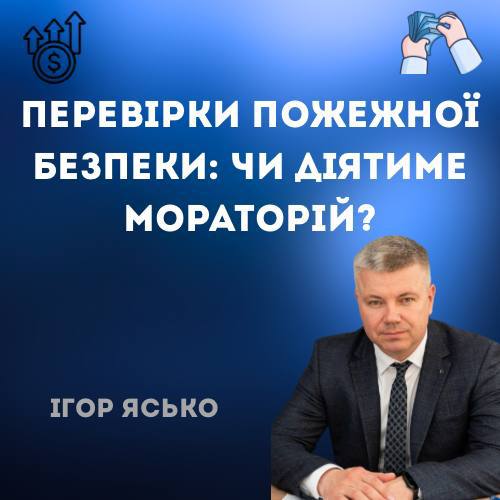
Fire Safety Inspections  Will the Moratorium Apply

In 2025, Ukrainian businesses once again found themselves caught between state regulation and the drive for deregulation. Against the backdrop of economic challenges, war, and ongoing infrastructure risks, the issue of fire safety inspections remains exceptionally relevant. Will the declared moratorium on inspections remain in effect? What legal risks and prospects await businesses? These questions are at the heart of our analytical review from the perspective of the legal community. Moratorium: Policy and RealityOn July 21, 2025, Ukraine’s National Security and Defense Council adopted a decision on a moratorium on groundless business inspections, formalized by Presidential Decree No. 538/2025 dated July 25, 2025. This was expected to send a strong signal to businesses about reduced pressure from regulatory authorities and to stimulate economic activity. However, as early as the next day, the First Deputy Head of the State Emergency Service (SES) issued a special instruction for focused fire and industrial safety inspections in industry. The order highlighted not only the requirement to keep inspection plans but also mandated administrative response to detected violations. Legislative Framework and Recent ChangesRegulatory basis: Code of Civil Protection of Ukraine; Law “On Fire Safety”; Fire Safety Rules of Ukraine No.1417; Sectoral and technical regulations regarding electrical installations, fire systems, evacuation, fire alarms, etc. On November 27, 2023, amendments (Law No.3063) expanded SES’s powers and imposed new obligations on businesses — regardless of any moratorium, companies must comply with all legal fire safety requirements. Specifically, if there’s a risk to life or health, the object may be subject to court-ordered closure. Essence of the Moratorium: Where and When It Does Not ApplyIn practice, in 2025, the declarative moratorium does not apply to: sectors with a high level of risk (industry, hazardous sites); fire safety inspections in cases of certain violations, accidents, emergencies, or citizen complaints. The SES has the right to conduct: scheduled inspections for specified risk categories, notifying companies in advance; unscheduled inspections upon complaints or incidents, typically without advance notice. So, even while the moratorium is formally in effect, the SES remains a full-fledged regulatory authority. Recent Inspection PracticeAnalytics show that in July 2025, despite the moratorium, SES regional units en masse resumed active enterprise inspections. Special focus was given to: enterprises with high-risk technological processes; facilities with mass gatherings (schools, shopping malls, hospitals). The reasons include not only formal fire safety requirements, but also the geopolitical situation and heightened threats. Inspections are often accompanied by administrative pressure and hefty fines for even minor or technical violations. Legal Risks for Business: What to ConsiderThe moratorium is no guarantee of immunity: updated SES powers allow inspections even during the moratorium. Moreover, authorities react swiftly and decisively to violations. The absence of formal grounds for inspection is a reason to appeal in court, but legal practice often favors SES in the name of safety. There’s a risk of having operations blocked: if a threat is established, the agency can initiate enterprise shutdown until the violations are removed. Legal Advice for Business Prepare for inspections: regularly assess compliance with minimum fire safety requirements, update documentation, undergo training and briefings. Keep documentation ready: inspection reports, evacuation plans, training registers, and records for safety systems should be accessible for inspectors. Engage a lawyer during inspections: legal support documents all actions of inspectors and allows for prompt response to procedural violations. Do not sign inspection reports without proper review. Appeal inspection outcomes: if inspectors violate procedures, provide insufficient evidence or issue contentious decisions, promptly challenge them pre-trial and in court. Conclusions and ForecastsThe moratorium remains more a political symbol than an actual guarantee for business regarding fire safety inspections. Law enforcement practice confirms: companies must strictly comply with all fire safety requirements, regardless of announced regulatory restrictions. Legal support is becoming an essential element of protection against potential abuses and reduces legal risks. High managerial responsibility and maximum operational transparency are the best way to avoid negative consequences, even during the “moratorium period.” If this material resonates with you — we’re ready to help you understand your own case. At WINNER, we always look for practical solutions that work in real life — no unnecessary theory, no delays, no templates. We have already helped dozens of clients in similar situations. Read their feedback on our website and social media — it’s the best testament to our work. Reach out if you feel it’s time for change. We’re here for you.Your WINNER Team!🤝Author: Ihor Yas’ko, Managing Partner at WINNER Law Company, PhD in Law. https://youtu.be/k2-1dq7hxcY?si=sJx4_A4OJouKsU31

Без рубрики

Fraud inspections during foreign economic activity action algorithm for the taxpayer

In 2025, Ukrainian businesses operating in foreign markets are increasingly facing fraudulent schemes. Geopolitical instability, broad use of digital tools, and the complexity of international legal relations make foreign economic activity (FEA) especially vulnerable to criminal actions and fraud. In a situation where the State Tax Service is developing specific recommendations, legal practice becomes critical — legal support allows the taxpayer to act lawfully and effectively in case of fraud. Types of fraud in the field of FEA The following types of fraud are most often reported in international trade: Creation of fake companies that disappear immediately after receiving advance payments; Use of shell counterparties with forged documents or altered bank details; Interception of business email correspondence followed by misdirected transfers to third parties; Manipulation with payment deferrals or forged transport documents. Both new companies with minimal history and unexpected changes in contacts of established partners remain significant risk factors. What does the State Tax Service recommend: immediate actions A taxpayer who becomes a victim of fraud during a FEA transaction must act quickly. The latest recommendations from the tax authorities suggest the following algorithm: Immediately contact law enforcement authorities. A criminal proceeding serves as evidence of fraudulent actions and is the basis for further protection of interests in court. Apply to court or arbitration (depending on the contract provisions) to enforce collection of debt from a non-resident. This also suspends the period for currency settlement in FEA and the accrual of penalties. Document all organizational and legal evidence: keep correspondence, payments, documents from counterparties, notifications to the bank about the incident; certify all these materials properly. Check the possibility of obtaining a force majeure certificate from the Ukrainian Chamber of Commerce and Industry or the authorized body of the non-resident’s country. This ensures legal protection in case of a dispute over overdue payments and fines. Notify the tax authorities about the incident via the “taxpayer’s electronic office” and provide supporting documents. Legal viewpoint: additional advice for business Considering current practice, a law firm recommends: Consolidate all evidence: every detail — from messenger and email texts to financial transactions — must be documented and preserved; in court, this is the key to proving fraud. Engage external experts: lawyers specialized in international disputes can promptly analyze the contract, determine the jurisdiction for consideration, and the best way to secure the counterparty’s obligations. Cooperate with your bank: immediately inform the bank of the fraud — some funds may not have been withdrawn yet, so it may be possible to dispute transactions and block suspicious payments. Conduct independent audits and consultations: express analysis of fund flows, third-party involvement, and a comprehensive anti-crisis audit makes it possible to timely identify and localize risks. Pre-trial and judicial settlement Not all cases of fraud immediately become criminal cases. Often, disputes due to non-fulfillment of obligations or suspicious transactions are considered in commercial or civil proceedings. Pre-trial settlement: sending official claims, participation of lawyers in negotiations, and signing a settlement agreement can save time and reduce reputational and financial risks. Arbitration claims: if the contract contains an arbitration clause, disputes may be adjudicated not necessarily in Ukraine but in any selected jurisdiction. It is important to engage lawyers with international experience. Preventing FEA fraud: the role of the lawyer in transaction support The best legal protection is prevention. The following recommendations help to avoid typical fraudulent schemes: Thorough due diligence of the counterparty: use of open registries, analysis of financial history, partner feedback, verification of signatory’s reputation and authority. Strict compliance procedures: establish clear communication channels, fix payment terms, specify arbitration mechanisms, and allocate responsibility. Employee cyber-hygiene: given the rise in phishing attacks, conduct training, ensure safe handling of business information, use official email domains, and do not open unsolicited attachments or links. Advance payment only with guarantees: make agreements using letters of credit, escrow/trust accounts, or export-import insurance. Legal consequences and business opportunities Settlement deadlines. If a contract with a non-resident is not performed due to fraud, criminal proceedings and/or obtaining a force majeure certificate suspends the accrual of penalties as per the law. Possibility of tax confirmation. By proving your good faith to the tax authorities and documenting the fraud, a taxpayer can avoid additional tax liabilities or penalties for late currency settlement. Conclusion: legal support is the key to business preservation Recent legal practice proves that timely response, comprehensive legal support, and effective fraud prevention in FEA can minimize financial and reputational losses for business. Use of official communication channels, documenting all actions, and prompt notification of law enforcement and tax authorities form the foundation of business protection strategy on the international market. The material is prepared based on current practice in supporting FEA contracts and recommendations of relevant authorities as of 2025. If this material is relevant to you — we would be happy to help solve your specific situation. At WINNER, we always look for solutions that work in real life — without unnecessary theory or templates.We have already helped dozens of clients in similar situations. Read their reviews on our website and social media — this is the best indicator of our work.Contact us if you feel it’s time for a change. We are here for you.Your WINNER team! 🤝Author: Ihor Yasko, Managing Partner, Law Firm “WINNER”, PhD in Law.       https://youtu.be/k2-1dq7hxcY?si=54Ov2eCmTj2ztwez

Без рубрики

Mandatory military training for medical students Ukraine is forming a new medical officer reserve

In the summer of 2025, the Verkhovna Rada voted, and on July 29, the President of Ukraine signed Law No. 4538-IX introducing mandatory military training for medical and pharmaceutical students. This move was a response to the urgent need from the Armed Forces and the healthcare system regarding the shortage of trained military medics, an issue aggravated by the full-scale war. The law comes into effect on January 1, 2026. Key Provisions of the New Law: Mandatory nature:Completing the full officer reserve military training program is now compulsory, not voluntary, for all students studying medical and pharmaceutical specialties (bachelor’s level and above), who are medically fit for service and have passed professional and psychological evaluation. Form of training:The training will be conducted in military departments/units based at all higher medical and pharmaceutical educational institutions, regardless of ownership. Process organization:Educational institutions are required to organize the appropriate programs — if a military department did not exist before, it must be established. Program implementation:Students who do not pass selection based on health are exempt, while the rest must undergo the officer reserve medical training program. Reasons for these changes:A key reason for this norm is the shortage of military doctors and pharmacists that became clear during combat operations. Until 2022, such specialists were mainly trained on a voluntary basis: less than 5% of all medical graduates participated. Today’s war format requires far greater resources, rapid mobilization of medical personnel, and readiness to quickly reinforce the military medical service. Innovations in the education system: Expansion of military training departments: The program will ensure either the creation of departments where they did not exist or the expansion of existing ones. Experts note that prior to these changes, such departments operated in only 10 out of 15 medical universities. Approval of specialties: The Ministry of Health and Ministry of Education coordinate the list of military registration specialties, and the Ministry of Defense and the Armed Forces determine the volume of training in accordance with state needs. Practical component: The program will use existing infrastructure — training grounds, simulation centers, cooperation with military units, and introduce National Resistance courses for basic military skills formation. Legal and educational nuances: For whom is it mandatory? All full-time students pursuing medical/pharmaceutical degrees (in both state and private universities) who are fit both physically and mentally. Compliance control: Universities are responsible for organizing the training; refusal to implement it is a violation of the law and licensing requirements. Costs and funding: A transparent funding mechanism is expected, both from the state budget and other sources. Voluntary elements: Female medical students may participate in practical sessions voluntarily, as per regulations approved by the Cabinet of Ministers. Impact on education and the labor market: Quality of training: Increasing the reserve of military medical officers will strengthen the country’s defense capacity and make education more adapted to the realities of wartime medicine. Labor market: Having more reserve officers among doctors will let young professionals gain extra qualifications and join service more quickly during mobilization or emergencies. For students this is an added burden; for institutions — a change in the educational process. Gender aspect: Until now, many female medical students did not undergo military training; it remains optional for them now, though this could change in the future. Advantages of the initiative: A flexible and scalable personnel reserve for the army and support roles. Higher quality training of military medics and better adaptation of graduates to wartime realities. Raised prestige of the military medic profession. Possible risks and challenges: University load: Not all institutions have the facilities or staff to provide for military training. Support from the Education, Health, and Defense Ministries is required. Psychological and academic pressure: The already demanding program may become even harder, affecting performance and motivation. Training quality: There is a risk of formality without enough practical experience — real competencies, not box-checking, are necessary. Voluntariness for women: Gender balance in the military reserve may remain unequal. Conclusions:Starting from 2026, Ukrainian medical and pharmaceutical students fit for military service will be mandatorily trained as medical reserve officers. The law not only meets the demands of the present and wartime, but modernizes the education system and strengthens the military medical reserve. The success of the initiative depends on proper organization, resources, substantive curricula, and consistent support for all participants. If this material was relevant for you — we are ready to help you with your situation. At WINNER, we always look for practical solutions — no unnecessary theory or templates. We have already helped dozens of clients: read their reviews on our website and social media. Contact us if you feel it’s time for change. We are here for you.Your WINNER team! 🤝Author: Ihor Yasko, Managing Partner of the Law Firm “WINNER”, PhD.               https://youtu.be/k2-1dq7hxcY?si=54Ov2eCmTj2ztwez

Без рубрики

Is it true that the TRC the State Labor Service and the Tax Service conduct inspections together

In the second half of 2025, the business community is actively discussing “joint inspections” — as of July, Ukraine has expanded the authority of commissions to check the status of military registration at enterprises. New legislative changes have given rise to rumors and myths about whether tax inspectors, labor inspectors, and representatives of the Territorial Recruitment Centers (TRC) now come to offices together and operate as a “single front.” Our legal analysis provides a detailed answer, based on the law and honest business practice. Legislative background: regulations and changesFrom July 23, 2025, the new provisions of the Cabinet of Ministers Resolution No. 1487 (as amended by No. 892 dated 16.07.2025) entered into force, regulating the inspections of military registration. The commissions responsible for such inspections officially include representatives of: Territorial Recruitment Centers (TRC), interregional bodies of the State Labor Service, territorial bodies of the State Tax Service. Key point: What does a joint inspection actually mean?Although from now on the State Labor Service and the State Tax Service are officially part of the military registration inspection commissions, this does NOT require their physical presence together with the TRC during an on-site inspection. In practice, inspections are carried out as follows: The TRC is the main inspecting authority that initiates and conducts the onsite inspection; The State Labor Service and the Tax Service may participate in the commission (providing materials, consultations, remote monitoring, sending requests, initiating their separate inspections), but are not necessarily present together with the TRC representatives at the company. What do the different agencies cover? The TRC checks compliance with military registration obligations: maintaining records and journals, appointing responsible persons, having schedules, lists of conscripts, timely notification of changes in personnel, etc. The State Labor Service is concerned with the proper formalization of labor relations, correct payment of wages, use of civil contracts instead of employment contracts, etc. Special attention is paid to hidden labor relations (e.g., people operating as sole proprietors or those who actually perform work under formal contracts). The Tax Service can check tax compliance concerning payments to employees, the grounds for people’s presence at a company, compare information with databases on sole proprietors, contractors, etc. Why did the commission form arise?The TRC does not have direct authority to inspect business relations or documents related to sole proprietorship/civil contracts. Therefore, the tax and labor authorities were included in the commission for effective detection of hidden workers or formal circumvention of military registration. What does this mean for business?The presence of a “commission” does not always mean mass “raids.” In most cases, the involvement of the authorities is formal, and interaction occurs via information exchange or sending inquiries.The grounds for on-site inspections are strictly regulated: there must be an official notice and inclusion in the plan (for scheduled inspections, a 10-day notice is required). Unscheduled inspections happen in case of booking, mobilization orders, complaints, etc.During an on-site visit, the TRC may demand documents related to military registration. Materials related to labor or business relations (for example, civil contracts, acts of completed work) may be requested separately by the State Labor Service or the Tax Service, not necessarily on the day of the main inspection. Practice in 2025: inspection realitiesAccording to accounting and HR portals, the number of “simultaneous” site visits by all three authorities is an exception, not the rule. The prevailing scheme: the company receives a letter about the military registration inspection, the TRC conducts the visit or document inspection, and the State Labor and Tax authorities may join separately, based on information from the TRC or their own analysis. Moratorium and inspections: exceptions and risksThe 2025 moratorium on “unsubstantiated” inspections does not apply to measures related to: military registration, mobilization issues, areas of high risk. The State Labor Service and Tax Service may join the process if they find signs of violations (such as unregistered workers or the evasion of military registration). Legal advice for business Streamline your internal military registration documentation in advance. Don’t assume that contracting with individuals (civil contracts or sole proprietors) automatically exempts you from scrutiny — these relationships are under close attention. During inspections, record all inspector actions and consult a lawyer in case of questionable or disputable requests. Do not sign any acts without a careful analysis of the consequences; avoid “compromises” that may lead to double fines. ConclusionsThe State Labor Service and the Tax Service are indeed included in the commissions for checking military registration status along with the TRC. However, the actual physical presence of all representatives at the company is not mandatory — cooperation is often conducted through information exchange, requests, or remote participation.The main focus of all agencies is on compliance with military registration requirements and preventing abuses involving unofficial labor relations/civil contracts.Every employer must be prepared for inspection and act within the law, following the recommendations of qualified lawyers. This material is based on an overview of Ukrainian legislative and practical matters as of July 2025. If this material resonates with you — we are glad to help sort out your specific situation. At WINNER, we always seek solutions that work in real life, without unnecessary theory, delays, or templates.We have already helped dozens of clients in similar situations. Read their reviews on our website and social networks — this is the best indicator of our work.Contact us if you feel it’s time for change. We are here for you.Your WINNER team! 🤝Author: Ihor Yasko, Managing Partner of the Law Firm “WINNER”, PhD in Law.     https://youtu.be/rEd6me-Ume4?si=mgm-i_IA8QZLxum8

Без рубрики

Inspections by the Antimonopoly Committee

The Antimonopoly Committee of Ukraine (AMCU) holds a unique position among state regulatory authorities, as it is responsible for maintaining fair competition, combating monopolies, and creating equal conditions for all market participants. Recent changes in national legislation and new inspection practices reflect the committee’s increased activity amid economic reforms and alignment with EU standards. Understanding the essence and mechanisms of the committee’s inspections is strategically important for entrepreneurs, legal departments, and corporate managers. Legal foundation of the Antimonopoly Committee’s activities and inspections The AMCU’s activities are based on several laws, including the Law “On Protection of Economic Competition” and the Law “On the Antimonopoly Committee of Ukraine,” as well as subordinate regulations governing the procedure for control, conducting inspections, and applying sanctions. Under the law, the committee is empowered to oversee compliance with antitrust legislation, prevent unfair competition, monitor business concentrations, and address abuse of dominant market position. In 2023–2024, significant updates to inspection procedures were introduced and detailed in the new Regulation on inspecting business entities, state authorities, local governments, and their associations. This document specifies the stages, timelines, grounds, rights, and obligations of parties involved in the inspection process. Who is subject to inspection and why AMCU inspections cover not only large companies suspected of market dominance or anti-competitive behavior but also governmental bodies, local authorities, and administrative management entities. The main grounds for inspection include: Complaints from businesses, citizens, or associations about antitrust violations; Detection of violations directly by the AMCU; Discovery of inaccurate information in documents submitted to the AMCU; Submissions from government agencies; Court decisions requiring an inspection. Such grounds provide the AMCU with broad powers, ensuring effective state oversight but also creating potential risks for businesses due to the unpredictability and scale of inspections. Types of inspections and procedures Current regulations clearly distinguish between scheduled and unscheduled inspections. The majority are unscheduled—potentially triggered by external complaints or internal AMCU initiatives. The procedure is detailed and includes: Issuing an order to conduct the inspection; Forming a committee to carry out the inspection; Notifying the business entity about the inspection’s start; Adhering to deadlines as set by the order and regulations; Recording the process and results in special acts and reports. Recently, the law has required a commercial court decision to initiate an AMCU inspection, thereby formalizing the process and strengthening business rights protection. The Committee’s powers during inspections During inspections, the AMCU wields significant information-gathering powers, including: Unrestricted access to company premises and assets regardless of location; Obtaining copies of any documents and information (including trade secrets); Seizure of documents, data carriers, and attachment of physical evidence; Inspection of premises, information systems, and servers; Requiring oral and written explanations from responsible company personnel. The inspected entity must assist the committee, not impede its actions, and ensure full and timely access to necessary resources. At the same time, businesses have the right to document the inspection, challenge specific actions or decisions, and engage legal counsel. Results, sanctions, and consequences of inspections Depending on identified violations, AMCU may apply the following measures: Issue an order to correct violations; Impose administrative and economic penalties (fines); Demand the division of a company or termination of anti-competitive agreements; Refer materials to law enforcement if there are signs of criminal offenses. Fines can reach up to 10% of the company’s revenue for the previous reporting year. In some cases, this involves hundreds of millions or even billions of hryvnias. Notable recent cases include fines against “DniproAzot,” the “Roshen” group, “Tedіs Ukraine,” “Avias,” and “DTEK.” Committee decisions may be appealed in court, but in practice, this route is difficult and expensive, with uncertain outcomes. Inspections can also trigger public controversy and damage reputations. Notable Cases: Practical Aspects PJSC “Dniproazot” (2018–2019):The company suspended liquid chlorine production, resulting in an epidemiological threat to cities. The AMCU found abuse of market dominance and fined the company over UAH80 million. Roshen Group (2018–2020):The company controlled more than 90% of the glucose syrup market, allowing it to influence pricing in its favor. This resulted in substantial fines and lengthy litigation. “Avias” and “DTEK”:Both cases involved collusion in the petrol and electricity markets, with fines of UAH4.7b and UAH0.77b, respectively. Some decisions are still under judicial review, illustrating legal disputes over economic evidence. These examples demonstrate the AMCU’s growing role in the country’s economic security and the challenges businesses face when defending themselves against sanctions. New trends: prevention, recommendations, and transparency Preventive measures are increasingly important: companies are more frequently consulting the AMCU for advisory opinions to ensure their commercial policies comply with antitrust law. This allows them to avoid inspections and penalties by timely legal adjustments to their business models. The AMCU actively informs businesses and the public about competition policy principles, introduces transparent interaction procedures with market players, and maintains open registers of decisions and information about detected collusions and anti-competitive actions. Risks for business and recommendations Today, any company may become subject to inspection. The key risks are: Heavy financial penalties, including multimillion fines; Reputational losses and increased scrutiny from partners and contractors; Disruptions due to asset seizures, document and data confiscation, resource blockages; Risks of simultaneous interference from other regulatory bodies, including financial monitoring and law enforcement. Recommendations to minimize risks include: Advance preparation and auditing of compliance with competition law; Formalizing and regularly updating internal policies on marketing, competitor communications, and tender participation; Training staff in antitrust compliance; Ensuring legal support and a rapid-response lawyer in case of inspections; Regularly consulting the AMCU for clarification on planned business actions. Conclusions AMCU inspections have become a crucial part of business processes in Ukraine, requiring modern risk management and compliance approaches. Legislative innovations and increased procedural transparency by the antimonopoly authority create both conditions for fair competition and new challenges for enterprises. The main trend—prevention, self-control, and stable relations with the regulator—can protect companies from financial and reputational losses. Effective preparation for inspections today is not only about satisfying formal requirements but also about building a long-term business development strategy in a competitive environment.

Scroll to Top